
Custom Engagement Rings NYC
A Private Williamsburg Studio Experience
You don't need to know anything about diamonds to walk in here. If traditional jewelry stores have felt overwhelming or transactional, this space was created for you. Most couples who find us arrive feeling unsure where to start. That's completely normal here.
Book a Free Consultation Walk-ins welcome during open hours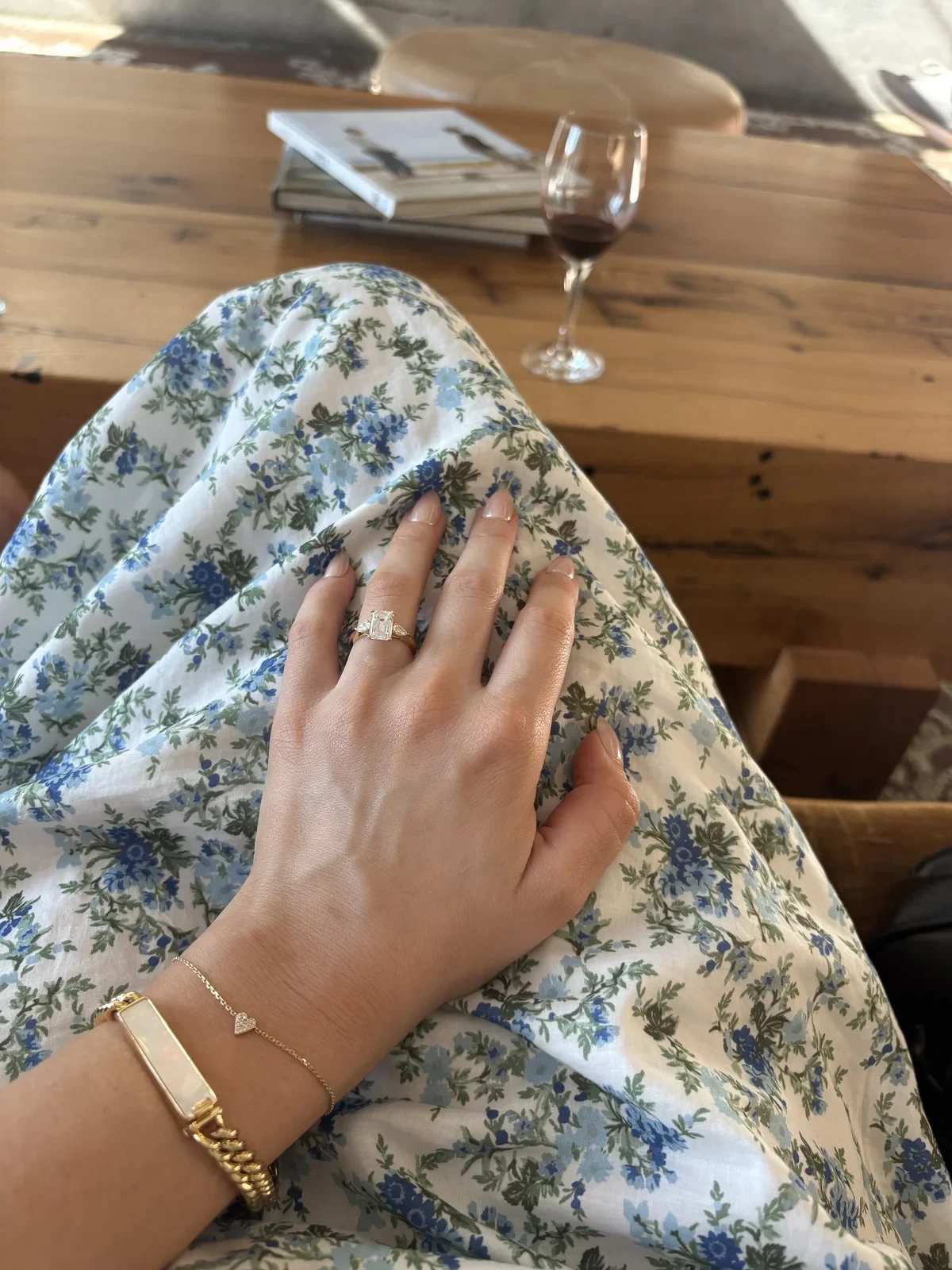
Who This Studio Is For
Some want calm guidance choosing the right ring from our curated collection. Others walk in with a sketch on the back of a napkin, a Pinterest board, or just a feeling they can't quite name yet. Both are perfect starting points. Every ring we make is handcrafted to order, never pulled off a shelf.
Haejin Jewelry is a woman-owned fine jewelry studio in Williamsburg, Brooklyn, designed for NYC couples who want a calm, private experience and an engagement ring made with ethical, lab-grown diamonds.
Haejin is for couples who:
- Want calm, pressure-free guidance from a single dedicated jeweler
- Care about ethical sourcing and lab-grown diamonds
- Want a handmade ring with a story behind it, not something stamped out by a machine
- Prefer a private studio over a crowded retail floor
We may not be right for you if:
- You want a machine-made ring available for same-day pickup
- You need the ring within 48 hours and cannot wait 3 to 4 weeks
- You prefer a large retail showroom with hundreds of ready-made options on display
How Custom Engagement Rings Are Made
A calm conversation where you don't need the right words. We guide you through style, budget, and priorities. Most consultations last 45 to 60 minutes.
We narrow choices thoughtfully so decisions feel clear. You'll see inspiration photos, metal samples, and diamond options side by side.
Every bespoke ring begins as a precise 3D model. You review proportions, setting height, band width, and every detail before anything is made. Unlimited revisions until it feels right.
Your ring is crafted entirely by hand using 100% recycled gold and an IGI-certified lab-grown diamond. No mass production, no assembly line. Every stone is set by hand, every prong checked twice, every surface finished with intention.
We give you a clear timeline, not vague estimates. Rush orders available for 2-week turnaround.
Bespoke Engagement Rings in NYC
Most jewelers in New York City offer what they call custom rings. In practice, that usually means selecting a setting from a catalog and choosing a stone to drop into it. The design itself is predetermined.
Bespoke is different. A bespoke engagement ring begins as a conversation, not a catalog. There is no template. Sue works directly with you from a blank page, sketching proportions by hand before translating your vision into a precise 3D model. You approve every angle, every measurement, every detail before anything is made.
This is what it means to work with an engagement ring designer in NYC who treats your ring as a one-of-one piece. Whether you arrive with a Pinterest board, a family stone, or nothing more than a feeling, the process meets you where you are. The result is a custom diamond engagement ring that could not have been made for anyone else.
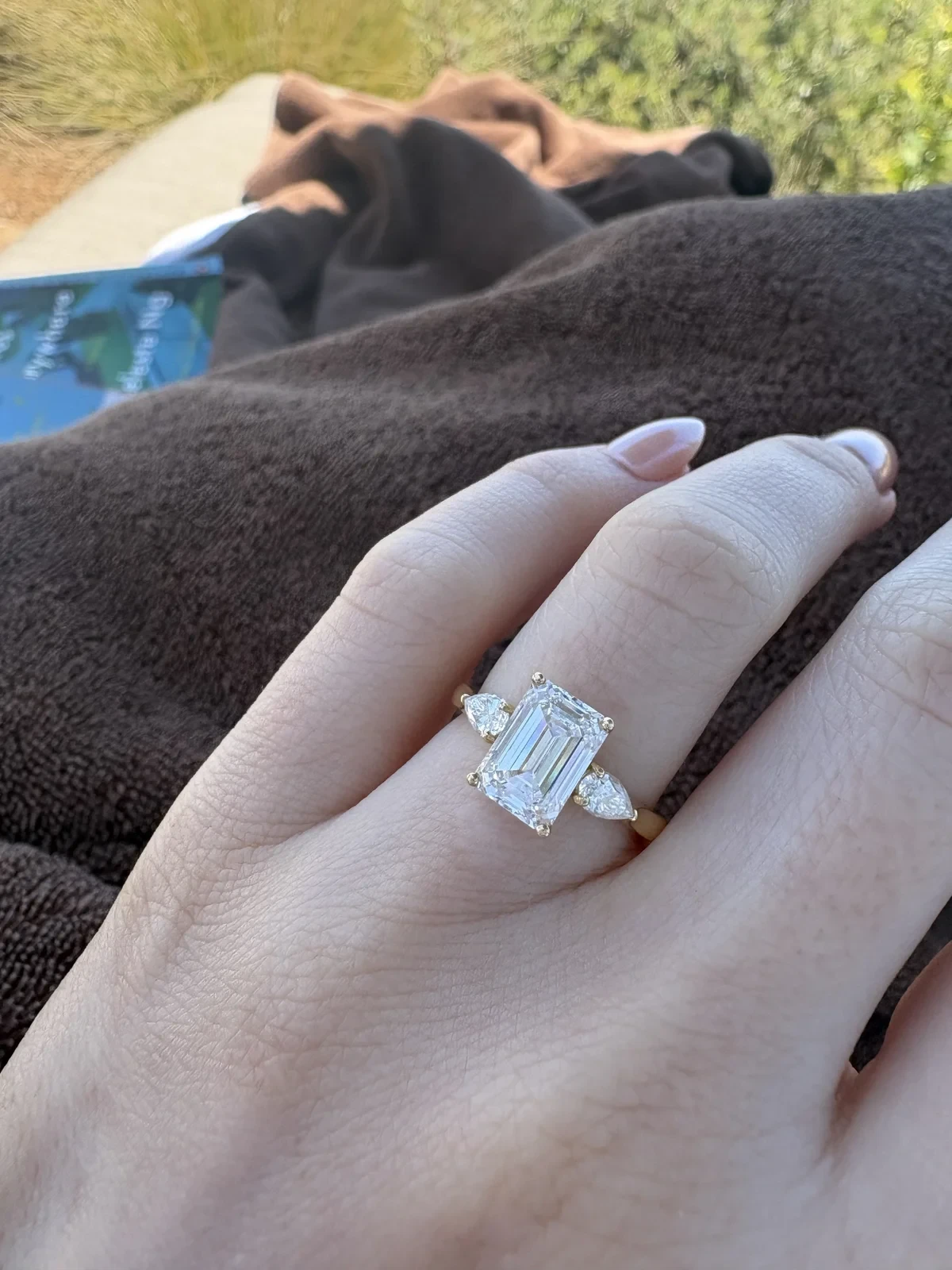
Why NYC Couples Choose Haejin
Private Studio
No foot traffic, no sales floor. Just you and your jeweler in a quiet Williamsburg studio. By appointment or walk-in.
Ethical Diamonds
IGI-certified lab-grown diamonds with the same brilliance, hardness, and fire as mined stones. 60 to 70% less expensive for identical quality.
True Bespoke, Handmade
Not template customization, not machine-stamped. Your ring is designed from a blank canvas, modeled in 3D CAD with unlimited revisions, and crafted entirely by hand.
Crafted in NYC, Never Outsourced
Your ring is crafted right here in New York City. Nothing is shipped overseas, nothing is outsourced. If you ever have a question, a resize, or need care for your ring, you come back to the same person who made it. No salesperson, no call center. Just Sue.
Custom Engagement Ring Pricing
Our custom engagement rings with IGI-certified lab-grown diamonds start from $1,450 including the setting and center stone.
The same ring with a natural diamond would cost $4,000 to $12,000 at traditional NYC jewelers.
No hidden fees. No markup surprises. Sue walks you through every cost before you commit.
We accept all major credit cards, PayPal, Shop Pay installments, and Venmo. 50% deposit to begin, balance on completion.
What Our Couples Say
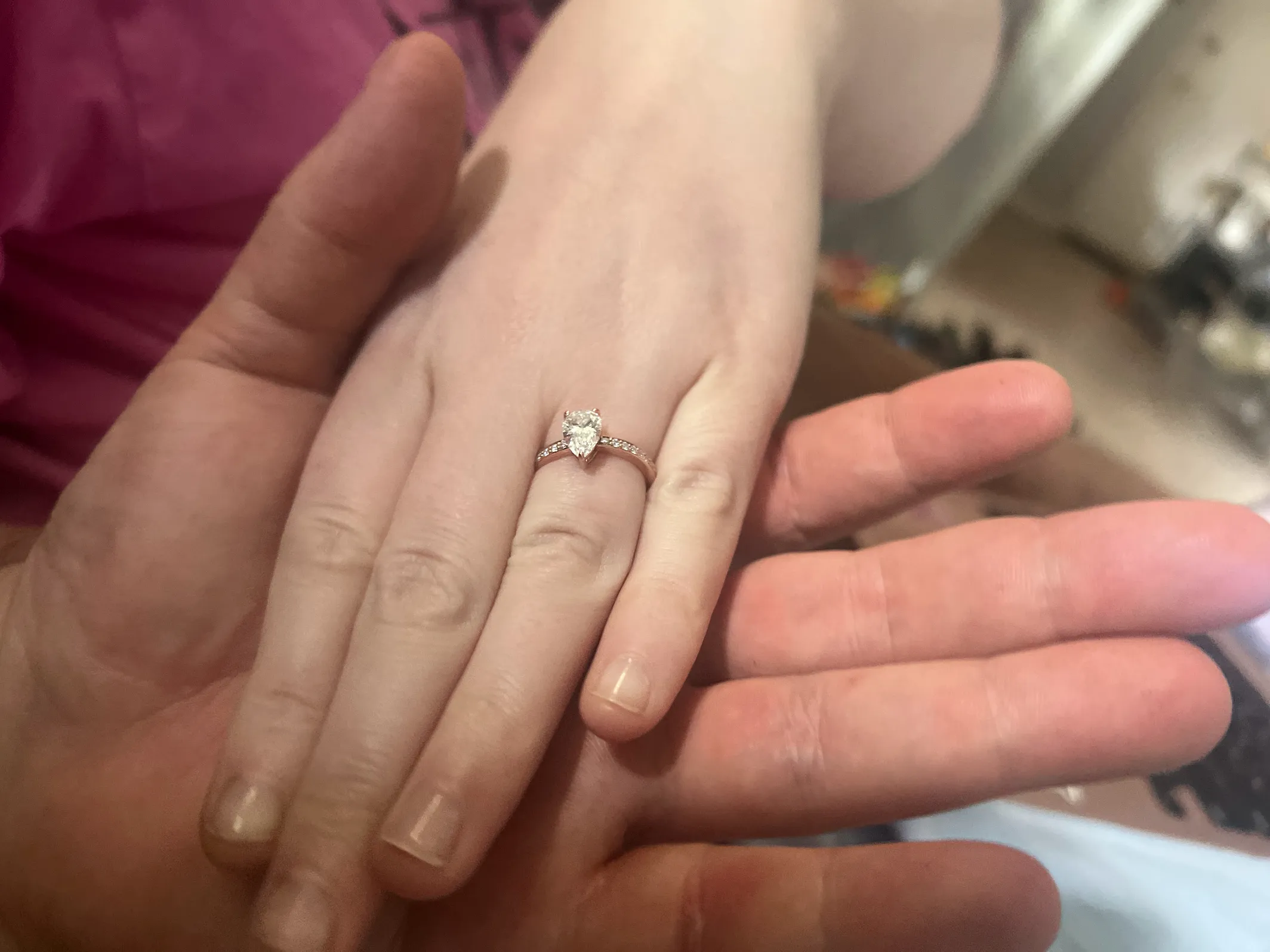
Personal care from an expert jeweler. Sue reached out to me directly, helped me design the ring, helped me pick out a diamond, and negotiated on my behalf. I got a great deal for the size and quality of diamond and it’s so beautiful. Honestly couldn’t be happier.

Sue is the best! My boyfriend (now fiance) found her shop right in our neighborhood and we visited to look at engagement rings. I had no idea what I wanted but Sue helped guide and educate me. She encouraged me to take my time in my decision as it was a big one! I didn’t see the final creation until I was proposed to and I was blown away. Truly exactly what I wanted. I am so happy with my experience (and my ring) and will definitely be back for more jewlery. I am also so happy to support a small business in my neighborhood.
Sue is the absolute best. I went for an engagement ring and she guided me, explained all the different options, we iterated together to find something which my partner would like and then she manufactured our dream ring for us. The diamond is of extremely high quality which is honestly hard to find. Sue is incredibly warm and kind and I can only recommend anyone to go to her. My fiancee immediately said yes and she thinks the ring is just perfect.

From the very beginning Sue made the entire experience feel so easy, thoughtful, and personal. She found the most incredible antique elongated cushion stone -- truly the ring I had been searching for my whole life, even in my dreams!! I truly cannot recommend Haejin enough.

Sue is the best. She helped us craft the perfect engagement ring step by step, explaining each feature. Unlike other places I visited, it was obvious that Sue really cared about finding what was best for us, and not just trying to sell us the most expensive ring possible. If you go with Haejin you absolutely will not regret it and you will receive something better than you ever could’ve imagined.
Her Ring Journey
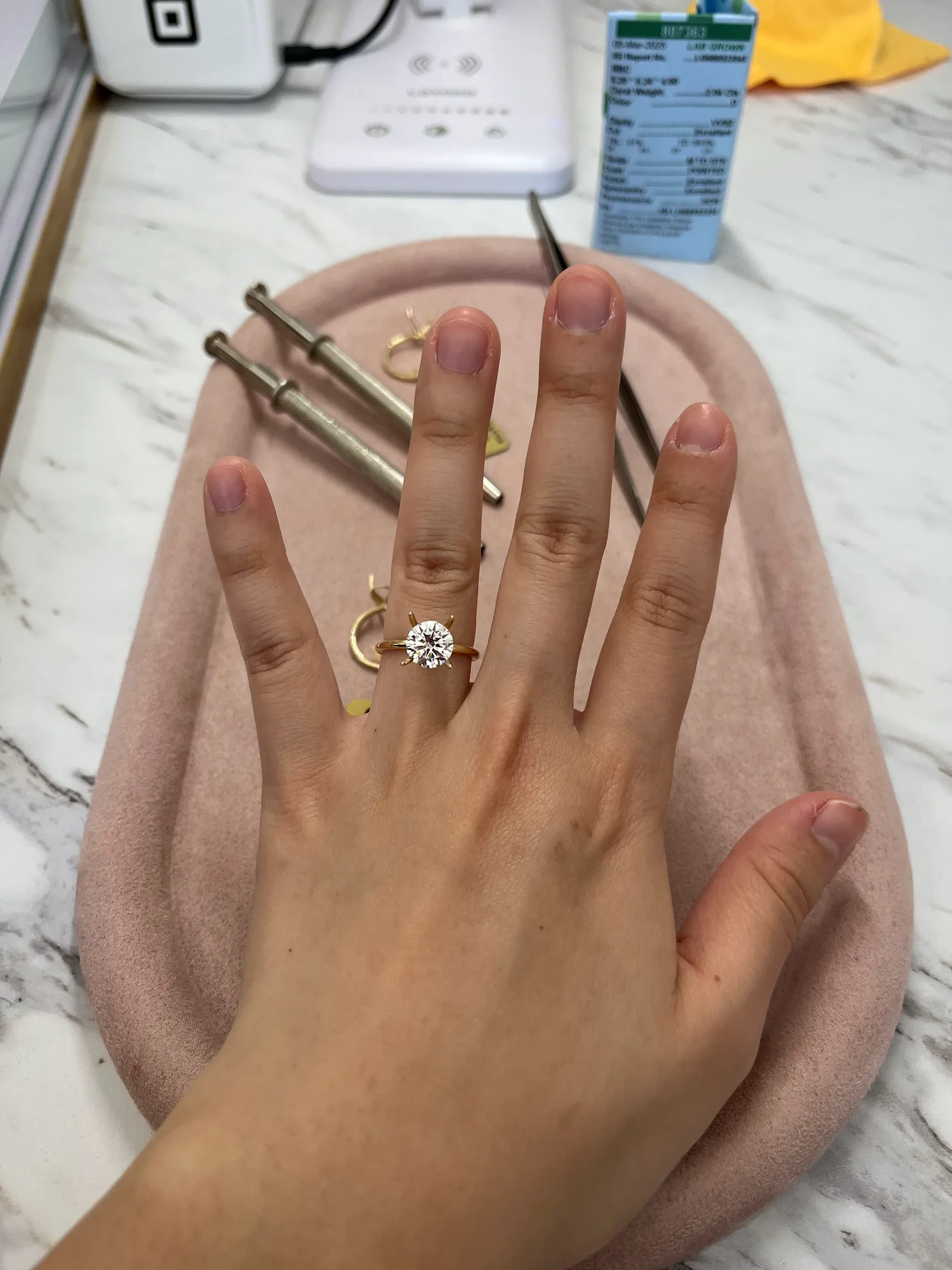
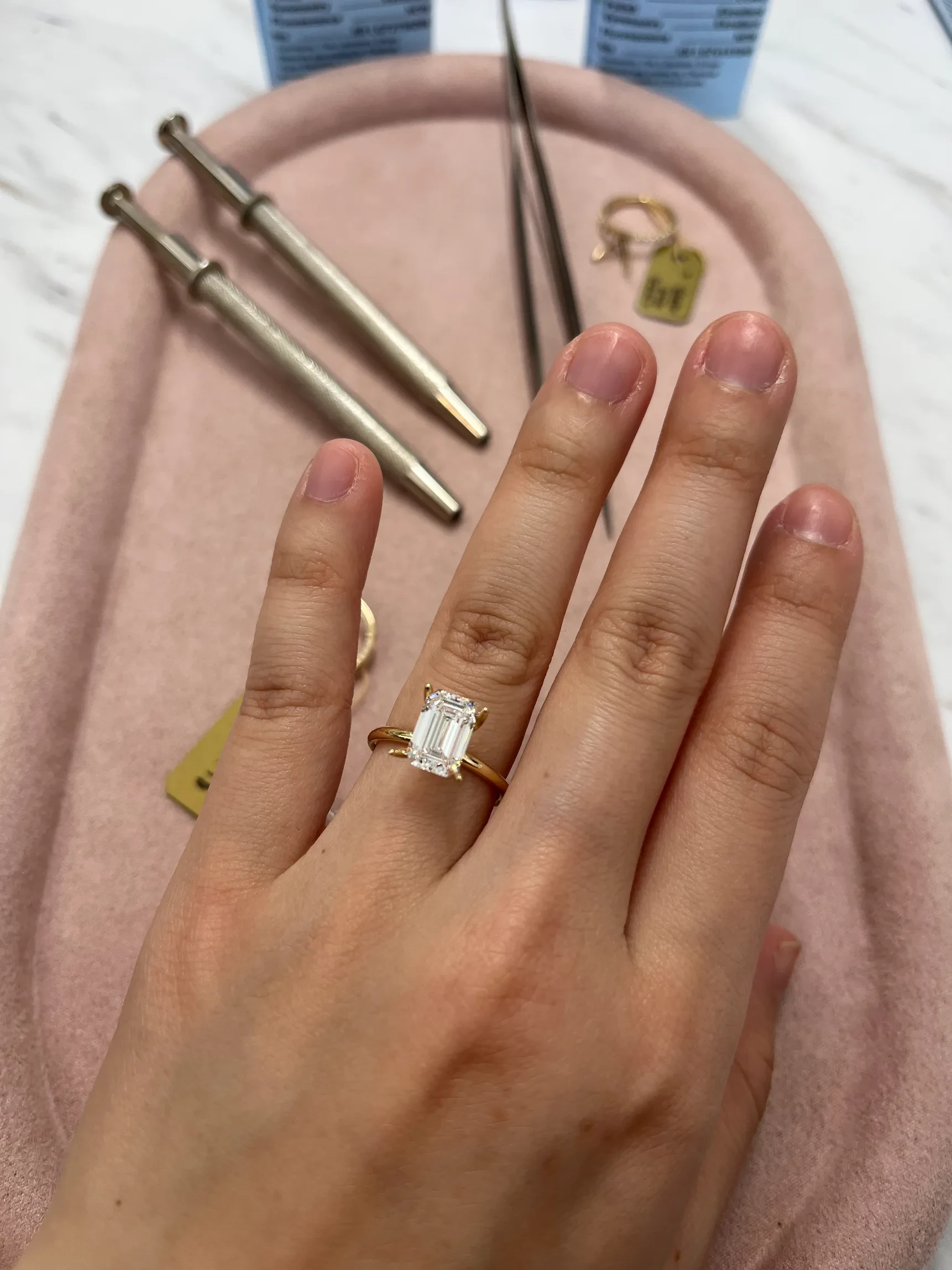
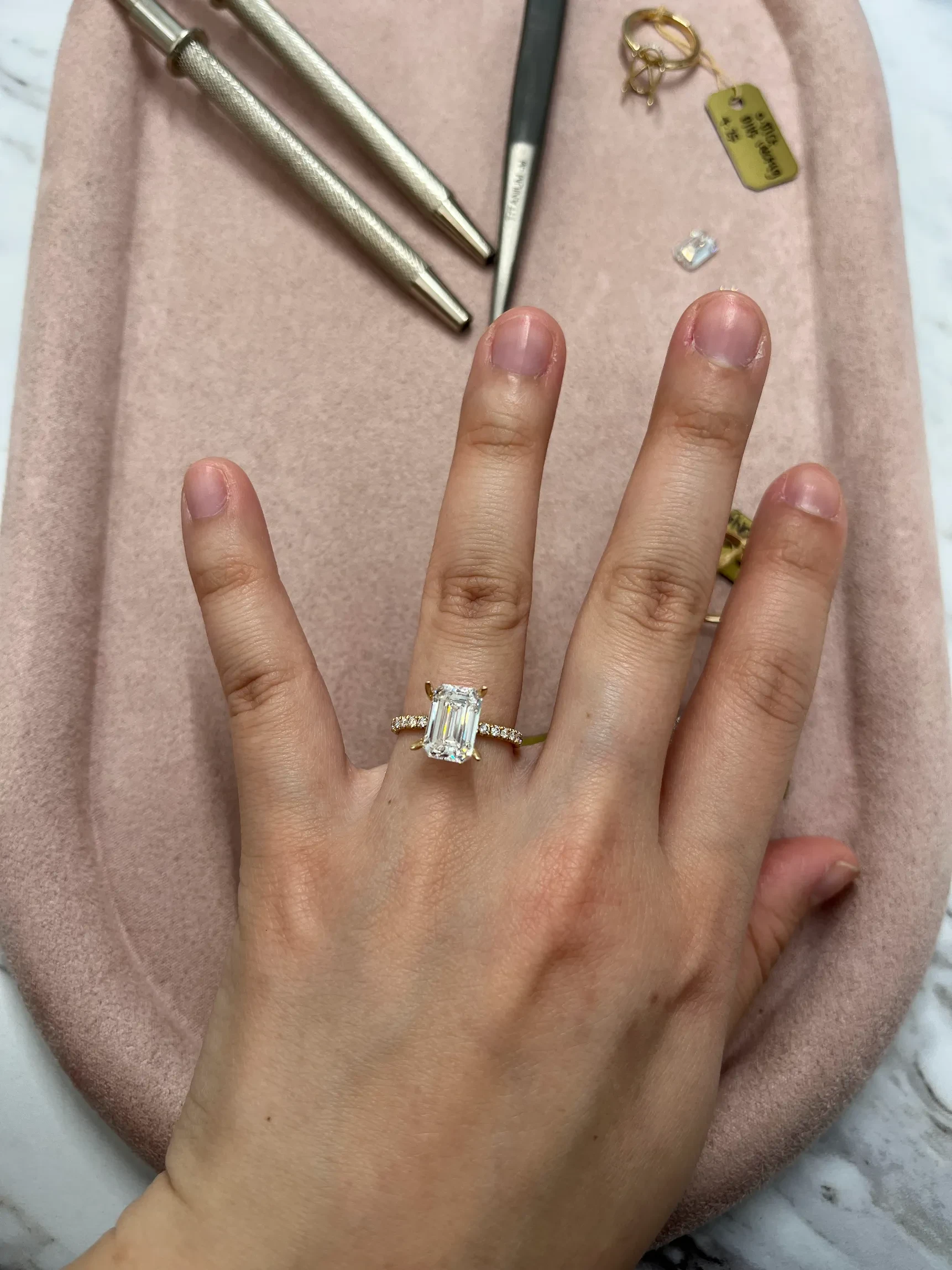
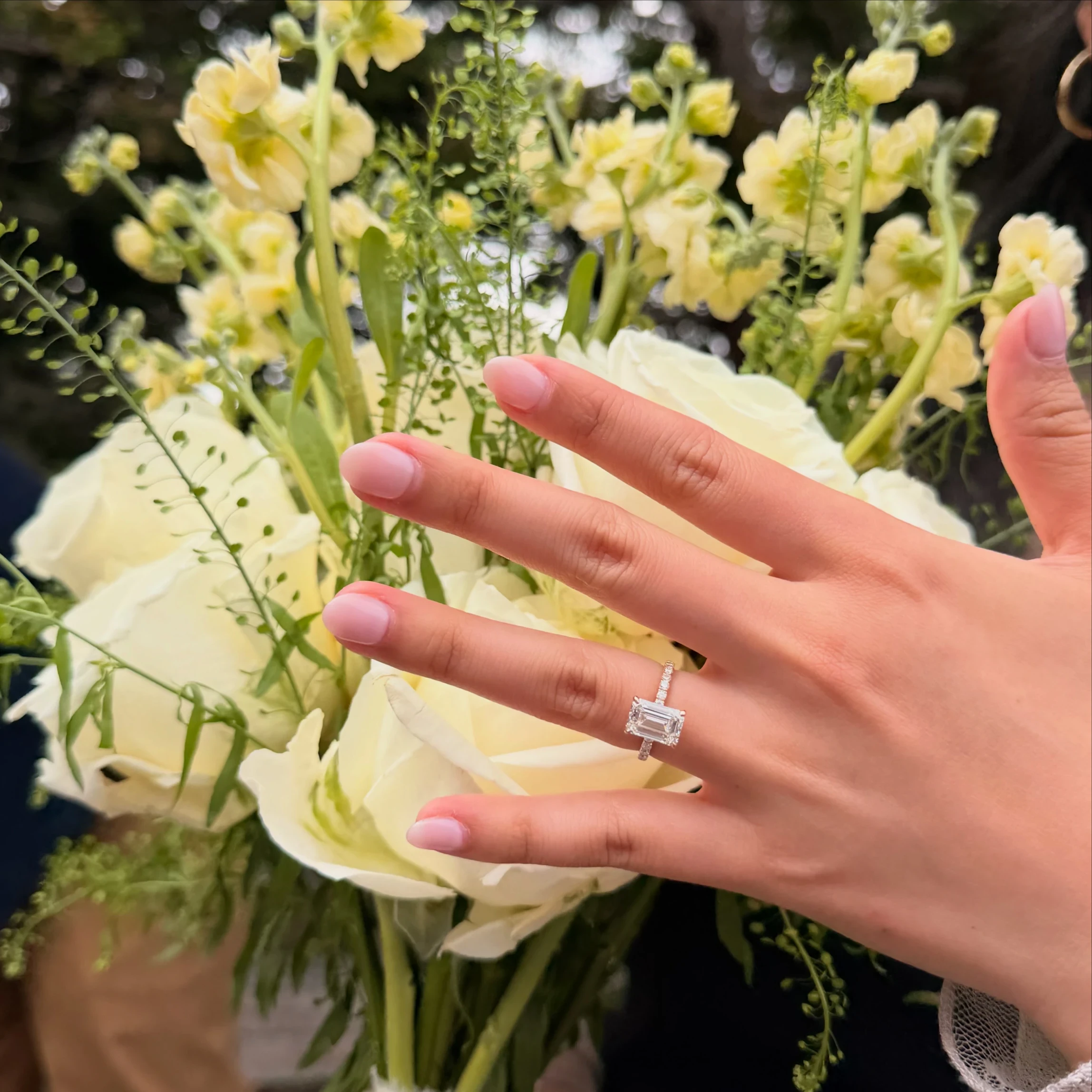
“I’m so glad Sue was a part of our engagement story, and I cannot recommend her enough!”
Jessica H. · Google ReviewA Haejin Moment
He planned everything. He just needed the ring to be right.
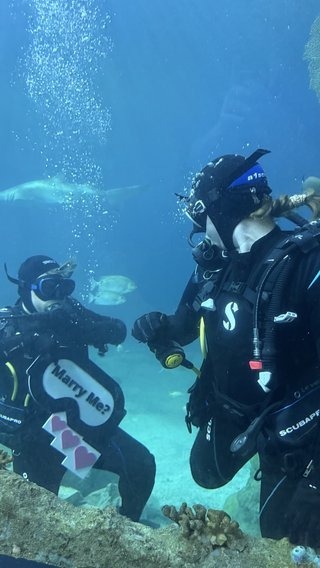
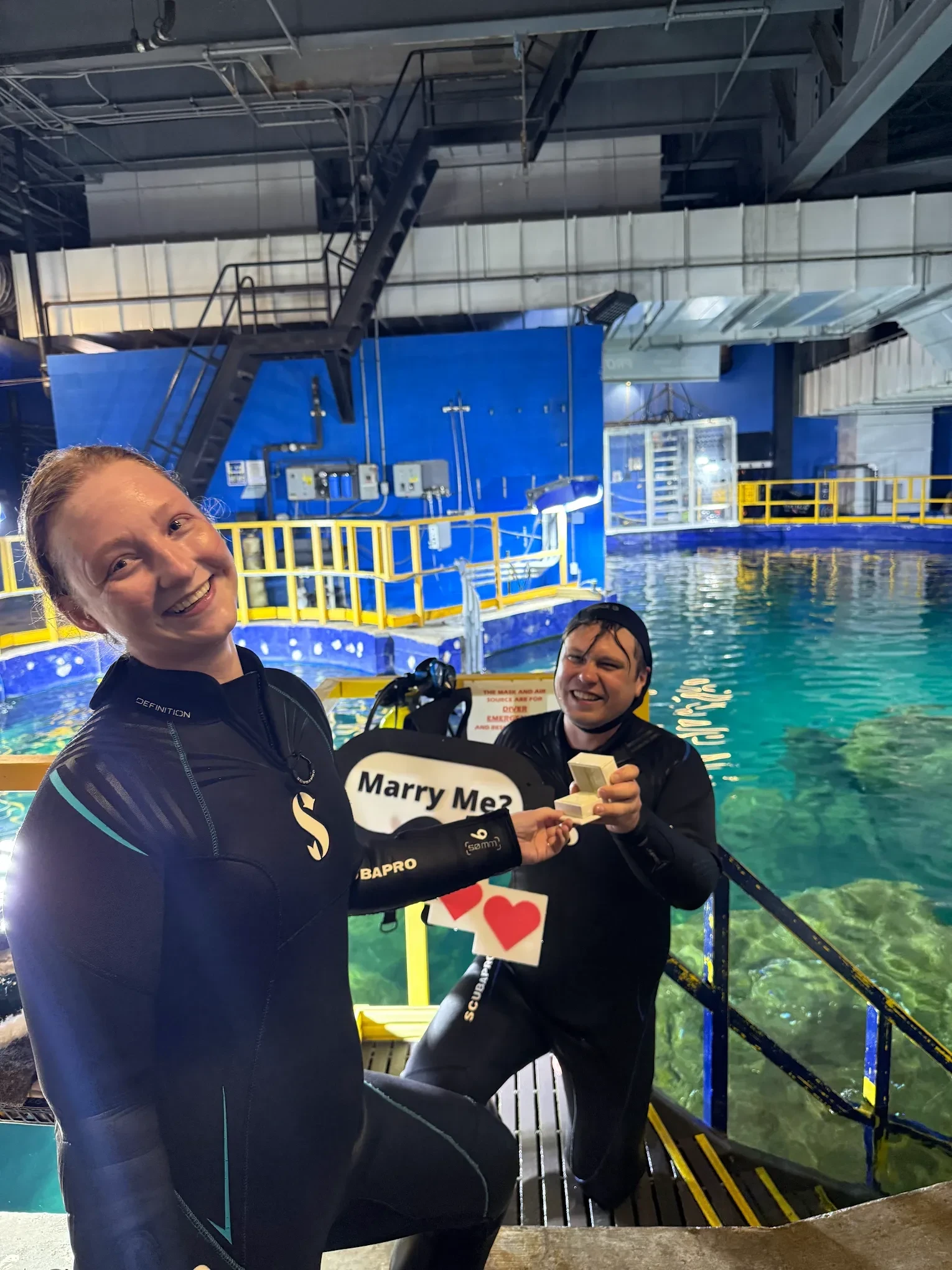
Shea proposed underwater with a ring from our studio. She said yes before they surfaced.
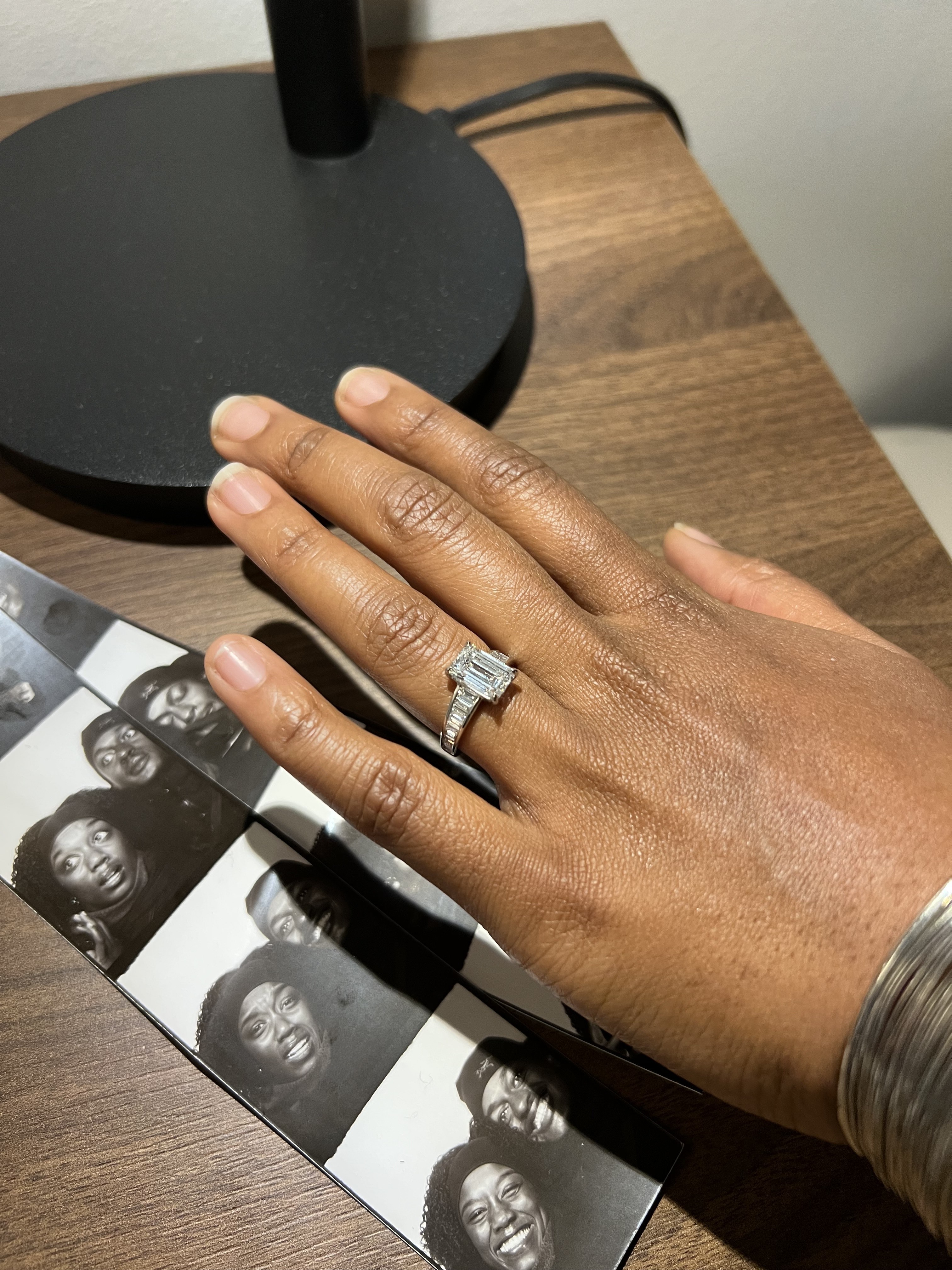
He presides over promises for a living.
Barry is a Brooklyn judge. When it came time to make a promise of his own, he walked into our Williamsburg studio. His fiancee knew exactly what she wanted. An emerald cut diamond she had been imagining for years. Over many visits, we refined every detail together until the ring in her mind became the ring on her hand.
The photo booth strip beside it is their story.
Every custom ring starts with a conversation →A note we keep in our studio
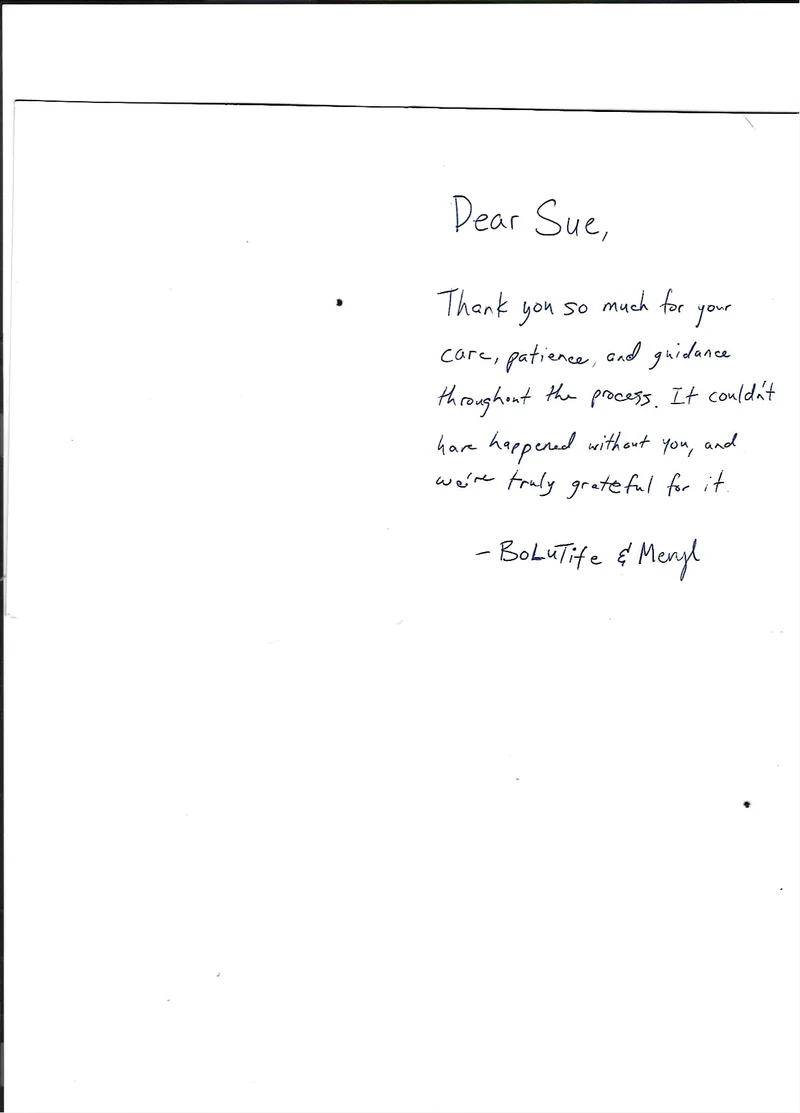
A custom engagement ring, built from the client's own written spec
He designed it star by star. We read every page.
Aleksey came to our Williamsburg studio at the end of July with a plan he had clearly been carrying for a long time. He had been to another jeweler first, who sent back a CAD file that looked like nobody had really read his notes. And he had a document, written by him, page by page, describing exactly what the ring needed to be. We read it before we drew anything.
Two constellations, his and hers, wrapping the band. The brightest stars set with the smallest diamonds we could source. The rest hand engraved, quiet enough that you would have to bring the ring close to your eyes to find them. And inside the band, a phrase only the two of them would understand.
We spent four weeks on it, and we would have spent four more. The star diamonds went smaller, and then smaller again, until they read as light rather than as stones. The engraving went quieter twice. At one point he wrote, “I promise I'm not trying to be difficult.” He never was. There is no such thing as too many rounds in this studio. A bespoke ring is not finished until it is the one you have been carrying in your head.
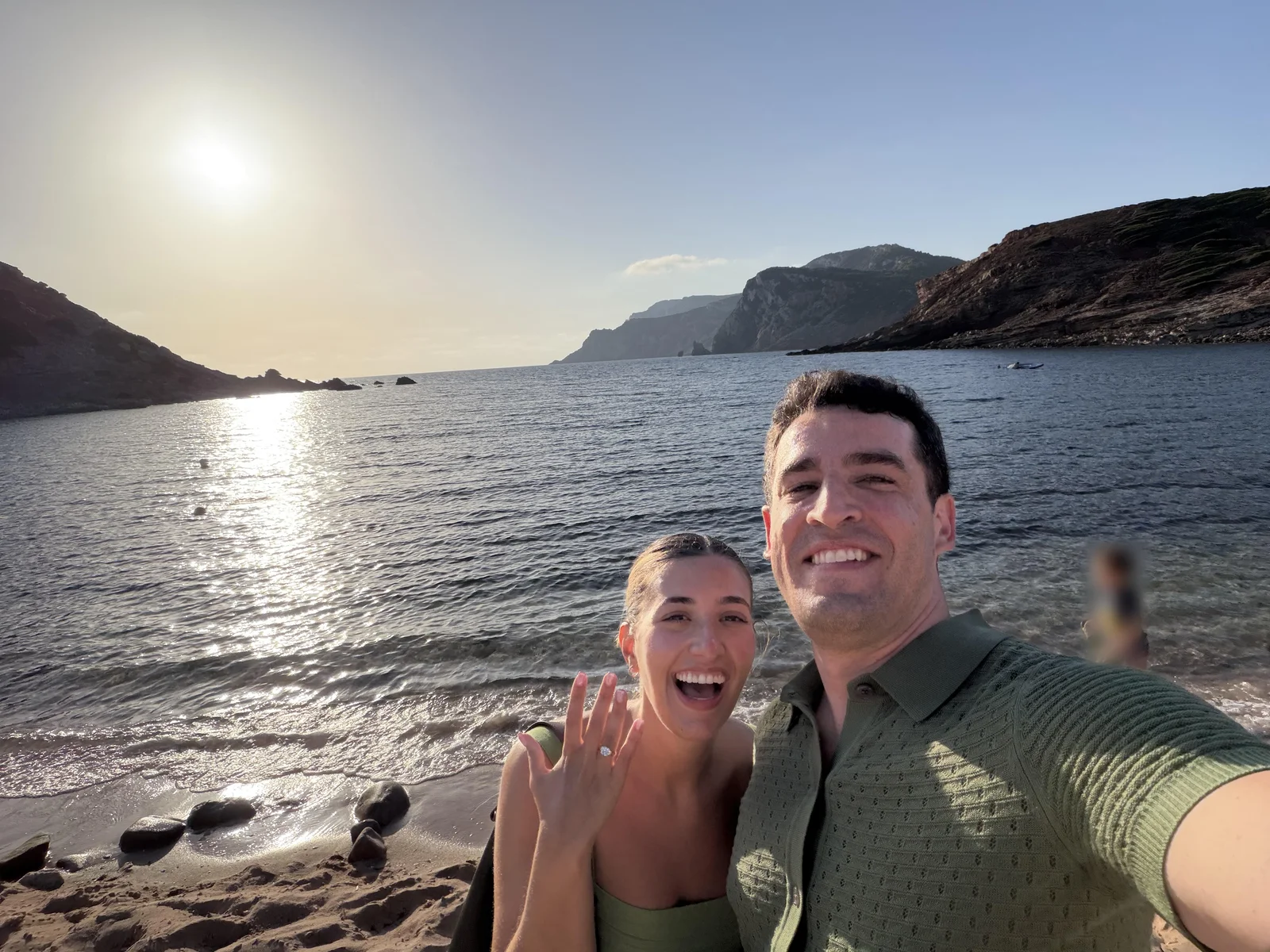
The calendar was the hardest part of this commission, and we said so from the start. He was flying to Sardinia on September 2 to propose on a beach in Alghero, near her family, on the 6th. Five weeks, for a ring that had never existed before. We told him the date was the real risk, not the design. He wanted to try, and so did we. The ring was always going to follow him to Italy. What we could not shorten was customs: five business days, against a proposal three days out. Past midnight in Sardinia, unable to sleep, he wrote: “I'm at a total loss at the moment.” He did not need to be.
The ring came out of casting on the 3rd. We set it, engraved it and finished it in two days, and it was polished, checked and boxed by noon on Saturday. A friend of his was flying out that night. He collected it at the studio, carried it across the Atlantic himself, and it was in Alghero the day before he proposed.
“Success! She absolutely loves it.”
Aleksey, by email, September 8, 2026- Two hand-engraved constellations
- Micro-set star diamonds
- Hidden inscription
- 3D CAD from the client's own spec
- Made in NYC

Summer 2026
Jess knew what she wanted before she sat down.
An emerald cut on a pave band. The stone set low, close to her hand. Something that felt like hers. She and Alex walked in on a Saturday afternoon. Two and a half weeks later, her ring was finished.
She texted us in July: “We got engaged!! The ring is so, so gorgeous.”
Planning a fall or holiday proposal? A custom ring takes four to six weeks from first conversation to finished piece. A conversation this week becomes a ring in your hands by October.
Start yours →What the Industry Says
Our clients share their experiences above. Here is what wedding industry professionals and Brooklyn press have to say.
"This is what shopping for a ring should feel like. Not a sales floor, but a conversation."
Lauren Ladouceur (@planwithlaur) is a NYC-based wedding content creator whose videos reach millions of viewers on TikTok and Instagram. Her work has been featured in The New York Times, The Wall Street Journal, People Magazine, and The Knot. After covering hundreds of weddings, she visited Haejin's Williamsburg studio and wrote about the experience in her 2026 engagement ring guide.
Read her full engagement ring guide →"The space itself reflects why women choose to shop for engagement rings in Brooklyn instead of Manhattan: it is calm and simple. There is time to ask questions, time to think, and it feels more like a thoughtful conversation than a performance."
Brownstoner is Brooklyn's leading publication covering real estate, design, and neighborhood life. Their 2026 profile of Haejin Jewelry covered Sue Kim's journey from the diamond industry to founding an ethical studio in Williamsburg.
Read the full Brownstoner feature →"At Haejin Jewelry, a woman-owned studio in Williamsburg, Brooklyn, Sue Kim designs each ring from scratch with the couple who will wear it. Younger buyers, particularly in New York, are moving away from chain retailers and toward independent makers who offer transparency, direct relationships and the ability to customize."
Brooklyn Eagle, founded in 1841, is Brooklyn's oldest and most respected newspaper. Their June 2026 feature explored why NYC couples are choosing lab-grown diamonds and independent jewelers over chain retailers.
Read the Brooklyn Eagle feature →"At Haejin, every piece is designed, hand-finished, and quality-checked inside the Williamsburg studio. That kind of hands-on craftsmanship is not something you find scrolling an e-commerce site at midnight."Lauren Ladouceur, Plan with Laur
How Custom Rings in NYC Actually Compare
Most NYC couples visit two or three jewelers before choosing. Here is what the landscape looks like across the three main options in New York City.
| Diamond District Manhattan, 47th St |
National DTC Brands Brilliant Earth, VRAI, etc. |
Haejin Jewelry Williamsburg, Brooklyn |
|
|---|---|---|---|
| 1ct lab-grown solitaire | $3,500 to $6,000 | $2,500 to $4,000 | $1,450 to $2,800 |
| Custom design from scratch | Limited (mostly existing inventory) | Template customization | True bespoke with 3D CAD |
| Who designs your ring | Salesperson on commission | Online configurator | Sue, the founder, directly |
| In-person tryout | Yes (crowded showroom) | By appointment at showroom | Private studio, walk-ins welcome |
| Turnaround | Same day (existing inventory) | 2 to 4 weeks | 3 to 4 weeks (rush: 2 weeks) |
| Materials | Varies widely | Recycled gold, lab-grown | 100% recycled gold, IGI-certified lab-grown |
| After-sale care | Varies by store | Online warranty | Lifetime care from the same person who made it |
| Return policy | Varies (often final sale) | 30 to 60 days | 60-day returns, no questions |
The Diamond District is still good for commodity purchases where you know exactly what you want. National brands are convenient and well-marketed. But for a ring that is genuinely yours, designed by a real person who will know your name five years from now, a private studio is a different category entirely.
What Most First-Time Buyers Get Wrong
Even couples who do their research can overlook a few things that matter more than they seem.
Choosing for the photo, not the hand. Tall, elaborate settings look stunning in close-ups but can snag on sweaters, bump against desks, and feel heavy on a hand that moves through a real life. The rings that get worn happily for decades tend to sit low and feel invisible.
Prioritizing size over cut. A smaller diamond with an excellent cut will look brighter and more alive than a larger stone with a mediocre one. Cut is what creates fire. We always recommend choosing cut first.
Forgetting the wedding band. Your engagement ring and wedding band need to sit together on the same finger. If the engagement ring has a wide or unusual profile, a standard band may not sit flush. We design both at the same time so they work as a pair.
Assuming bespoke is out of reach. Most couples who walk in expecting to spend $5,000 or more are surprised to learn that a fully custom ring with an IGI-certified lab-grown diamond starts from $1,450. The assumption that custom means expensive is the biggest barrier, and it is usually wrong.
Lab-Grown Diamonds: Same Stone, Different Origin
A lab-grown diamond is physically, chemically, and optically identical to a mined diamond. This is not marketing. It is the official position of the GIA (Gemological Institute of America) and the FTC. Both are pure carbon, both are graded on the same 4Cs scale, and both are certified by the same independent laboratories.
The difference is origin and price. A lab-grown diamond is created in a controlled environment in weeks rather than extracted from the earth over millennia. The result is a stone that costs 60 to 80 percent less than a mined diamond of identical specs. A 1.5-carat E VS2 lab-grown round brilliant that would cost $8,000 to $12,000 as a natural diamond costs $1,800 to $3,000 as lab-grown.
Every lab-grown diamond at Haejin comes with an IGI certification documenting carat weight, cut grade, color grade, clarity grade, and a unique serial number you can verify online. Every setting uses SCS-certified 100% recycled solid gold. Never plated, never hollow, never vermeil.
The question is not whether lab-grown diamonds are real. They are. The question is whether you want to spend $8,000 more for the same stone. Most NYC couples in 2026 are choosing to put that difference toward the wedding, the honeymoon, or their first apartment together.
"I do not see mined diamonds as the equivalent of wearing real fur, but I do think women today want choices that reflect their values."Sue Kim, founder of Haejin Jewelry, in Brownstoner
Getting to Our Williamsburg Studio
We are at 123 Skillman Ave in Williamsburg, Brooklyn. Couples visit us from every borough and the surrounding suburbs. Here is how to get here from the neighborhoods we serve most.
L train from Union Square to Lorimer St. 25 minutes door to door.
J/M/Z to Marcy Ave or L to Lorimer. 15 to 20 minutes.
G train to Metropolitan Ave, 5-minute walk. Or drive: 10 minutes via Flushing Ave.
G train south to Metropolitan Ave. 20 minutes.
PATH to 14th St, L train to Lorimer. 35 minutes total.
7 train to Times Square, transfer to L. 50 minutes. Or drive: 30 minutes via BQE.
LIRR to Penn Station, then L train. 55 minutes. Or drive: 35 minutes via LIE.
Drive via George Washington Bridge + BQE. 30 to 40 minutes. Free street parking on Skillman Ave.
Real Moments, Real Rings
Every ring has a story. These are some of our favorites.
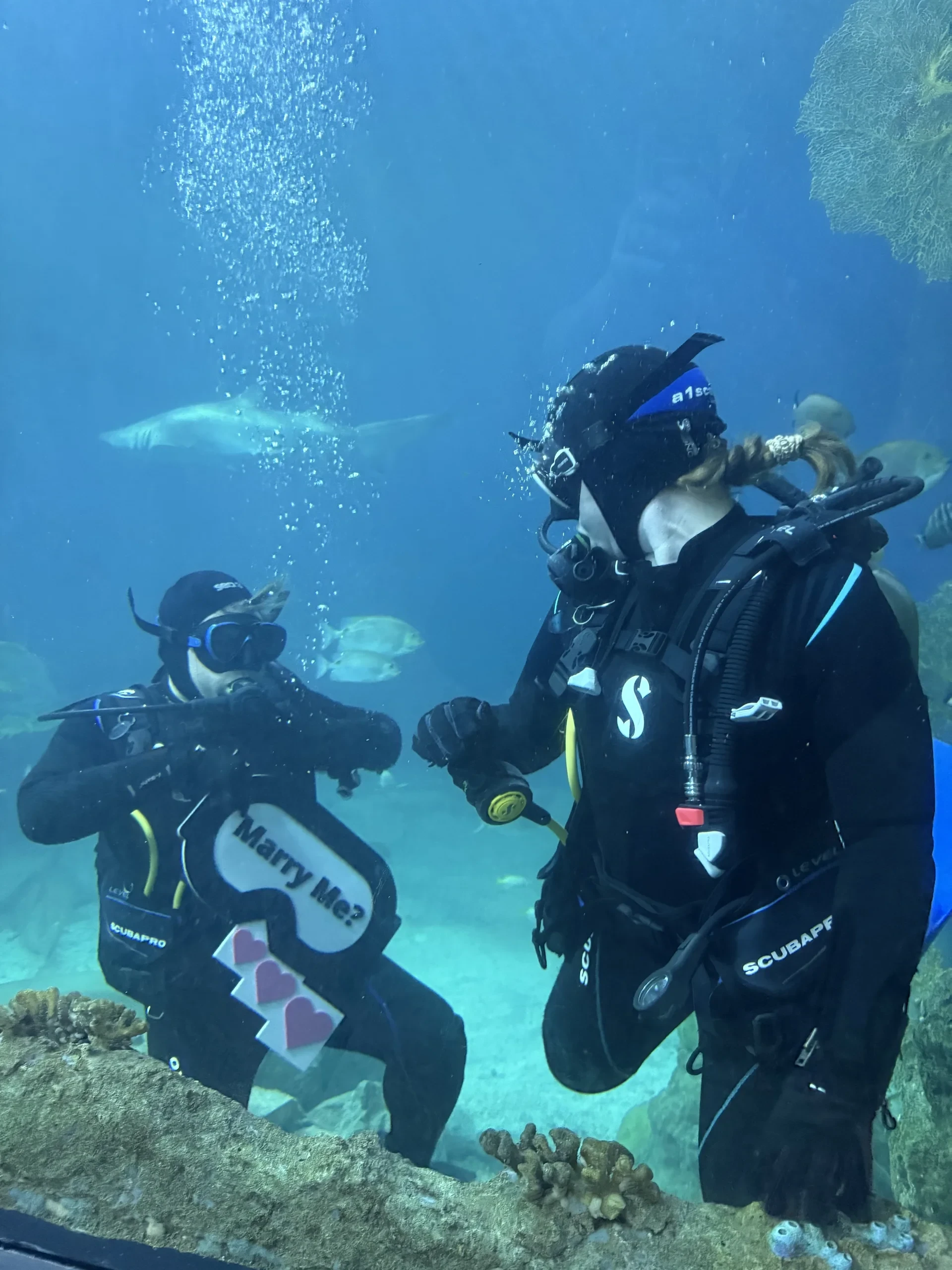
He proposed 30 feet underwater with a custom Haejin ring and a waterproof "Marry Me?" sign. She said yes before they surfaced.
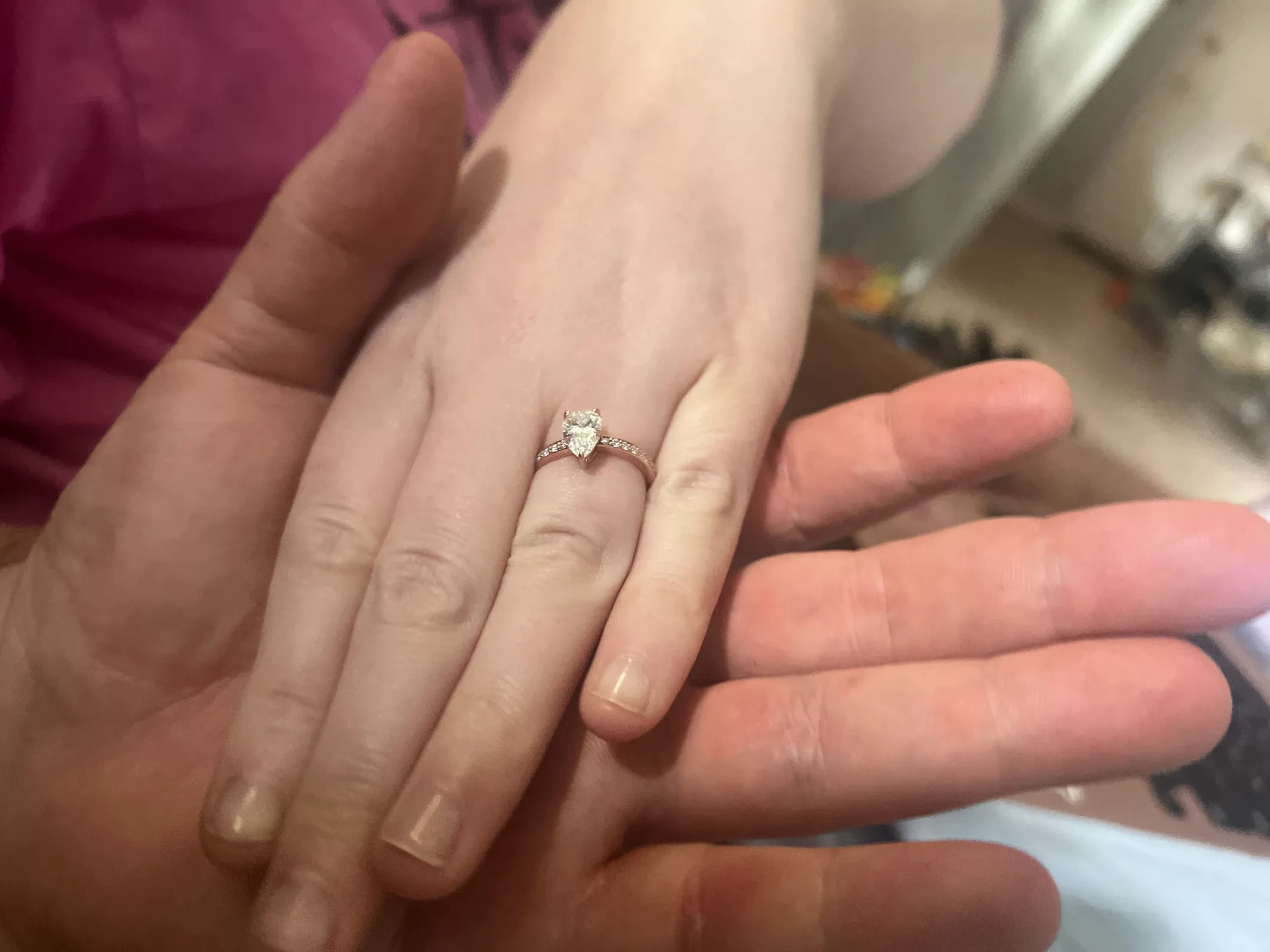
Custom designed with pear side stones in yellow gold.
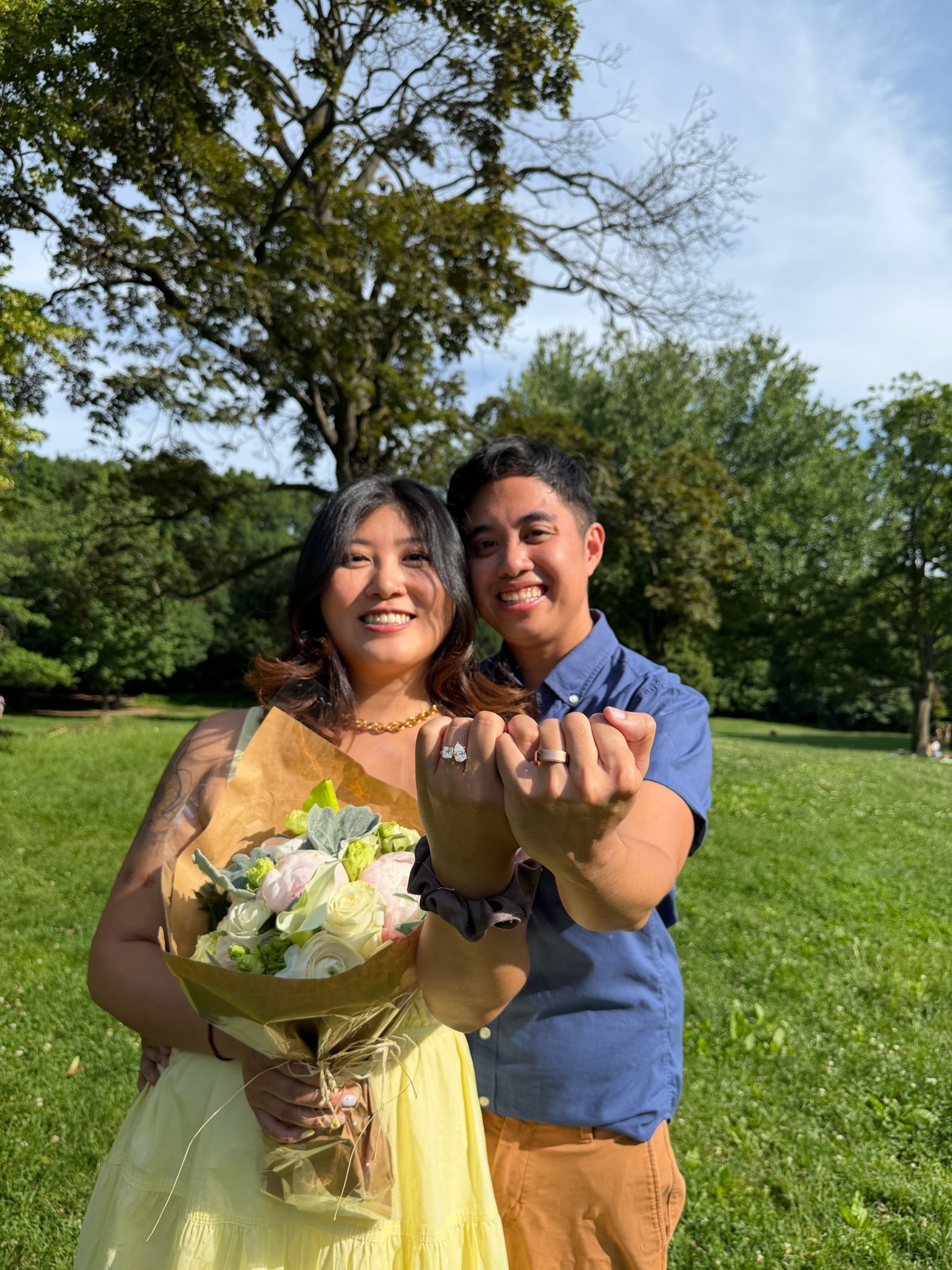
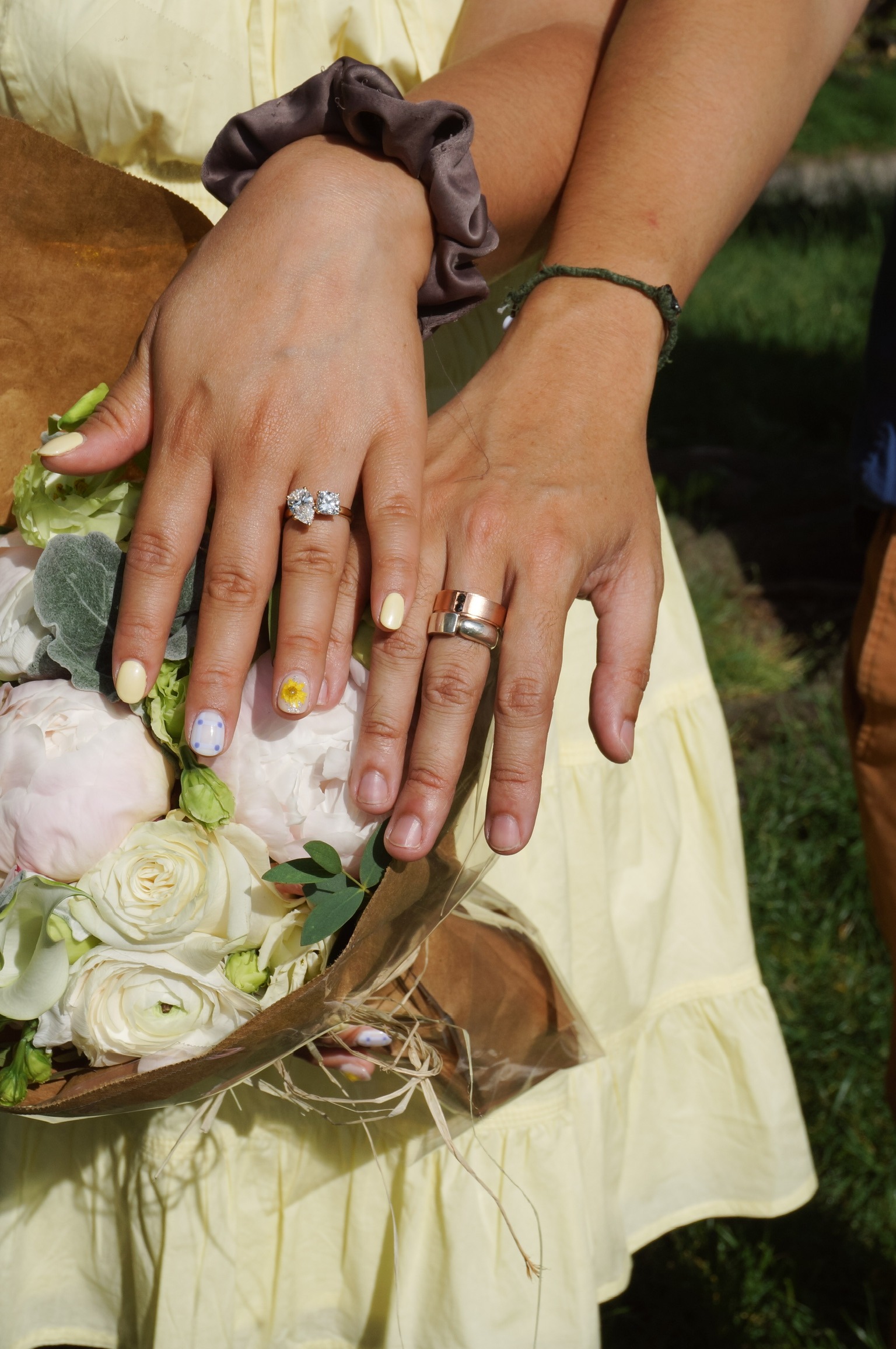
Planning your proposal? Read our guide: Best Places to Propose in Brooklyn & NYC
See more on Instagram @haejinjewelryGuides for the Journey
Not every decision happens in one visit. These are the guides our clients read most.
Frequently Asked Questions
How much does a custom engagement ring cost in NYC?
How long does it take to make a custom engagement ring?
Do I need an appointment for a custom ring consultation?
What is a lab-grown diamond?
Can I design my own engagement ring from scratch?
What if my ring gets damaged over time?
Where is Haejin Jewelry located?
Do you offer payment plans for engagement rings?
What certifications do your diamonds have?
Are lab-grown diamonds real diamonds?
What is the best place to buy an engagement ring in NYC?
How do I design a custom engagement ring?
Can I try on engagement rings before buying?
Do you make engagement rings for same-sex couples?
Is it better to design a ring in Brooklyn or Manhattan?
What if I am visiting NYC and want a custom ring?
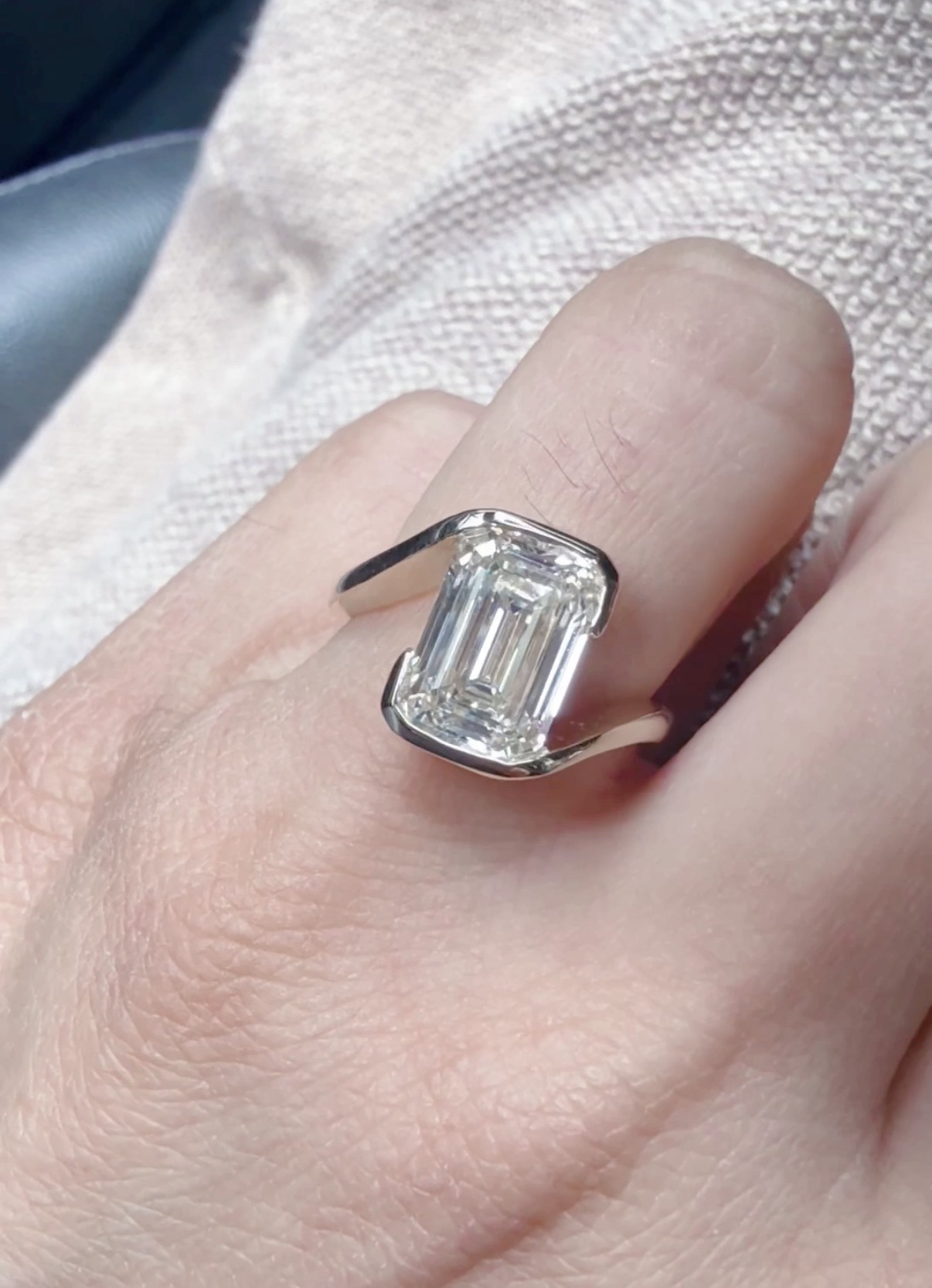
A modern emerald-cut lab-grown diamond in a clean bezel setting. Designed and set in our Williamsburg studio.
"Start your engagement exactly the way you mean to continue it: with intention, joy, and absolutely zero shortcuts."
Lauren Ladouceur, wedding industry expert
Ready to Begin?
Book a free consultation or walk in during our open hours. No pressure, no obligation. Just a calm conversation about what matters to you.
Book Your Free ConsultationL train: Lorimer St station, 5-minute walk east on Skillman Ave
Drive: Free street parking on Skillman Ave outside the studio
Open in Google Maps