
Wedding Band Width Guide: How Every Width from 2mm to 8mm Actually Looks on Your Hand

The most popular wedding band width for women is 2.5mm to 3mm. For men, 5mm to 6mm. But those numbers mean nothing until you see them on your hand.
I have been fitting wedding bands in our New York City studio for eighteen years. The question I hear most is not about metal or diamonds or price. It is about width.
How wide should my wedding band be?
It sounds simple. It is not. A 4mm band on my counter looks nothing like a 4mm band on your finger. Width is relative to your hand, your knuckle shape, your engagement ring, your daily life. Two women with the same ring size can try the same 3mm band and have completely different reactions. One says it is perfect. The other says it is too thin. Neither of them is wrong.
This guide shows every width on real hands. Not diagrams. Not illustrations. Hands that have been in our studio, wearing bands we made. If one thing about wedding bands is worth experiencing in person, it is the width.
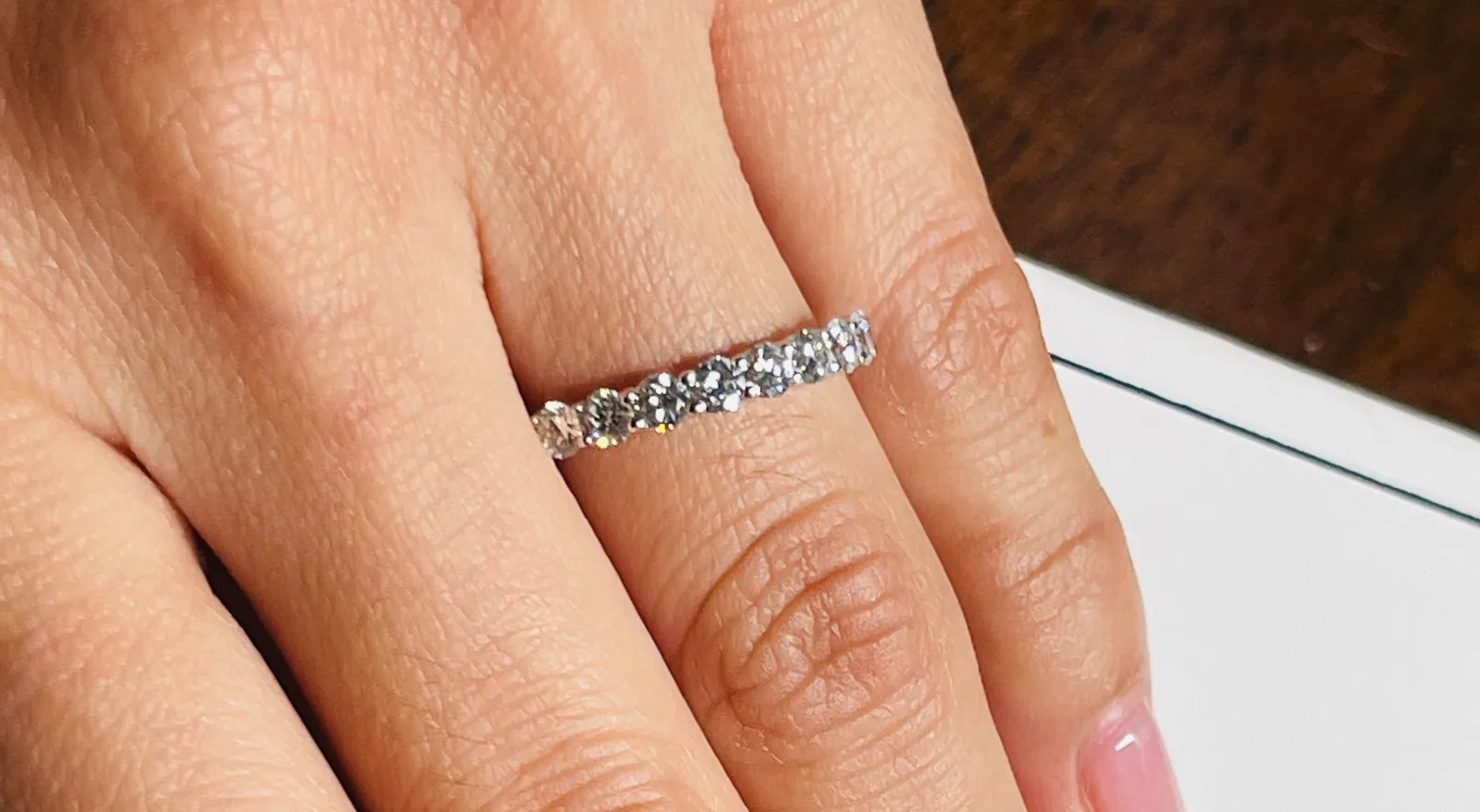
Every Width on Real Hands: The Visual Guide
Wedding band widths range from 1.5mm to 8mm. Most women choose 2.5mm to 3mm. Most men choose 5mm to 6mm. A wider band fits tighter than a narrow band at the same ring size, so always try the width you are considering before you commit.
| Width | Look | Best For | Feels Like |
|---|---|---|---|
| 1.5mm to 2mm | A whisper of metal | Minimalists, small hands, stacking | You forget it is there |
| 2.5mm to 3mm | The most chosen width | Most brides, pairs with any engagement ring | Present but not heavy |
| 4mm to 5mm | A statement | Eternity bands, confident women, standalone | You feel it at dinner |
| 6mm to 8mm | A landmark | The band IS the ring, men's standard | Substantial presence |
1.5mm to 2mm: The Whisper
The thinnest band I make. It disappears into your hand. You feel it more than you see it. Women who choose this width tend to wear it alone or stacked beneath a wider engagement ring where it acts as a quiet frame.
A 1.5mm band weighs almost nothing. You will forget it is there until the light catches it at an angle and a tiny row of diamonds sends a flash across the table. That is the point. It is not trying to be noticed. It is trying to be felt.
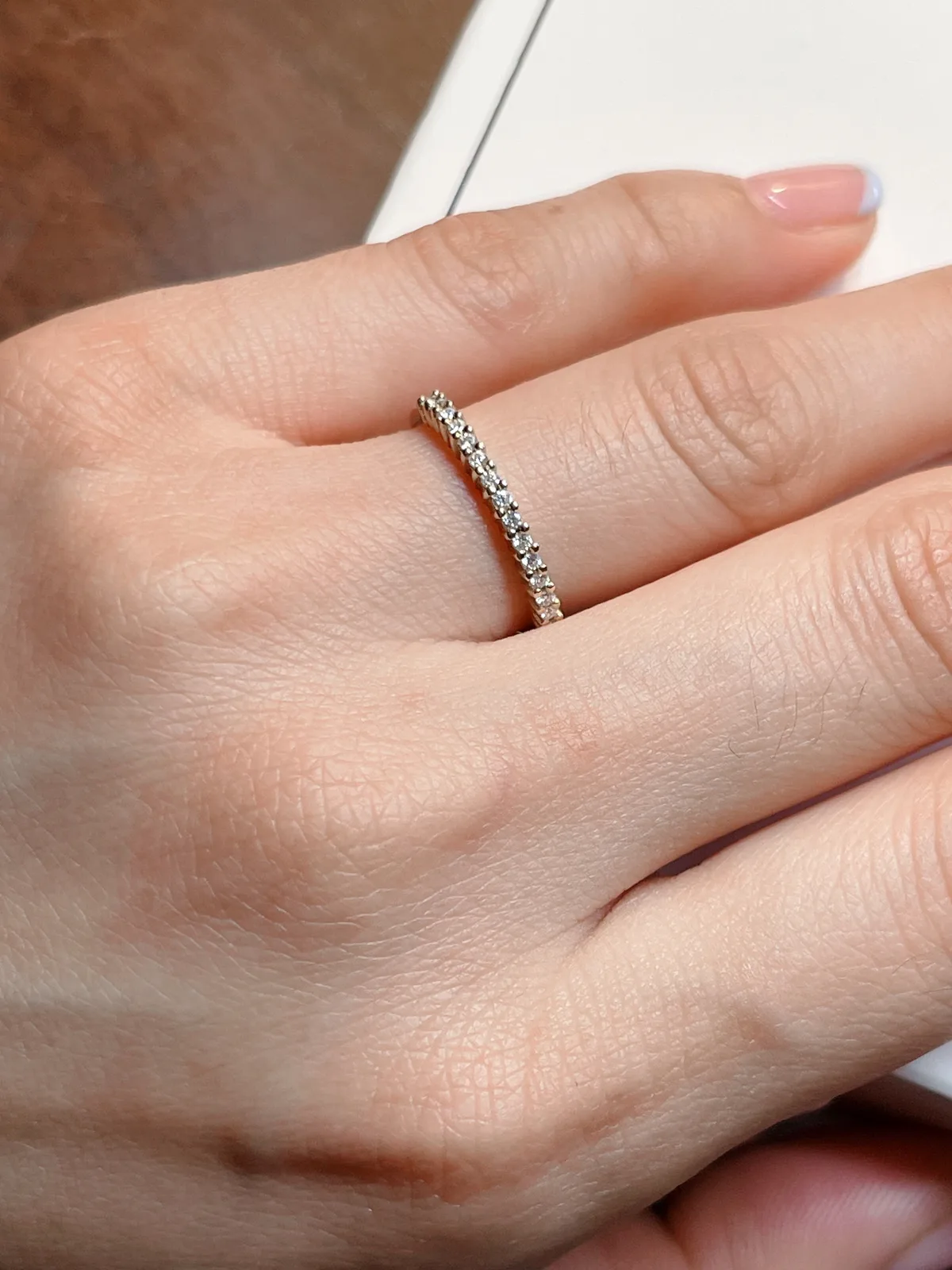
Who it is for: minimalists. Women with smaller hands who want the band to breathe. Women who already have a statement engagement ring and want the band to disappear next to it. Women who work with their hands.
2.5mm to 3mm: The Standard
This is where most women land. Wide enough to hold a full row of diamonds in a shared-prong or channel setting. Narrow enough to nest against any engagement ring without crowding it. If you are unsure about width, start here.
At 3mm, the band has enough presence to stand alone on your hand if you ever wear it without the engagement ring. It has enough surface area for diamond fire to be visible from across a room. But it is still delicate. It still reads as elegant rather than bold.
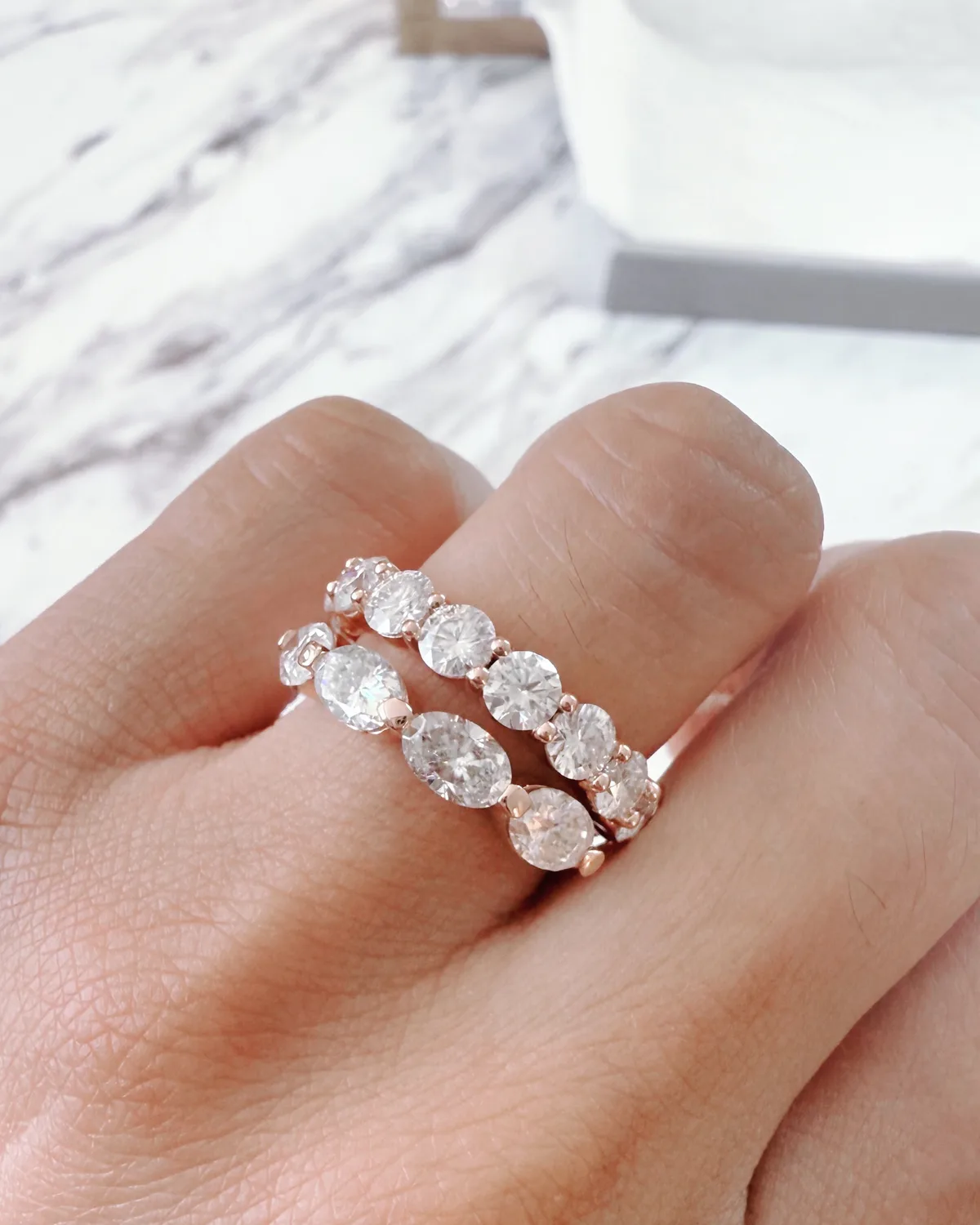
The most versatile width. Works with solitaires, halos, three-stones, pave settings. If your engagement ring has a thin shank, a 3mm band creates a subtle step up that adds visual weight without overwhelming.
4mm to 5mm: The Statement
Now you feel it. A 4mm band has presence. It catches light from across a dinner table. It has weight on your finger in a way that 3mm does not. Women who choose this width usually know exactly what they want before they walk in.
This is the sweet spot for large-stone eternity bands. At 4mm, a 3mm diamond has room to breathe in its setting. The proportions work. The fire is visible not just up close but in photographs, across the room, in the mirror when you catch your own hand at the steering wheel.
At 5mm, the band becomes a significant piece of jewelry on its own. I see 5mm most often in plain comfort-fit bands for men and in wide eternity bands for women who want the band to be the centerpiece.
6mm to 8mm: The Landmark
I fit fewer 6mm and 8mm bands for women, but the ones I fit are unforgettable. These are for women who want the band to be the ring. No engagement ring next to it. No nesting. Just the band, wide enough to make a statement every time you gesture or hold a glass or touch someone's shoulder.
At this width, comfort fit is not optional. It is necessary. A 6mm flat band will feel tight even at the correct ring size because the wider metal surface grips more of your finger. A comfort-fit interior lets the band slide over the knuckle and sit naturally. The difference between wearing a 6mm band comfortably and hating it by noon is entirely about the interior profile.
Wide bands are most popular for men. Most of our grooms choose between 5mm and 7mm. At 7mm, the band is visible from ten feet away. It says something. It is meant to.
Important: A 6mm band fits a full half-size tighter than a 2mm band at the same ring size. If you were sized with a narrow sizer, go up a quarter to half size when ordering a wider band.
What NYC Couples Actually Choose: Our Studio Numbers
The most popular wedding band width at Haejin Jewelry in Brooklyn is 2.5mm to 3mm for women and 5mm to 6mm for men. Here are the actual numbers from our studio in 2025 and the first half of 2026.
| Metric | Women | Men |
|---|---|---|
| Most popular width | 2.5mm to 3mm | 5mm to 6mm |
| Most popular metal | 14K Yellow Gold | 14K Yellow Gold |
| Average width | 2.8mm | 5.5mm |
| Choose comfort fit | Most brides with 4mm+ | Nearly all grooms |
| Return for anniversary band | Many within 5 years |
These are real numbers, not industry averages. Your hand is not an average. Try them on.
Width by Ring Type: Eternity, Plain, Contour, Stackable
Plain bands need at least 3mm for visual presence. Eternity bands look wider than their measurement because diamonds add visual weight. Contour bands are dictated by your engagement ring. Stackable bands work best at 1.5mm to 2mm each.
The same 3mm feels different in a plain court band than in a diamond eternity band. The diamonds add visual width. A 2.5mm eternity band can read as wide as a 3.5mm plain band because the stones create a border of light around the metal.
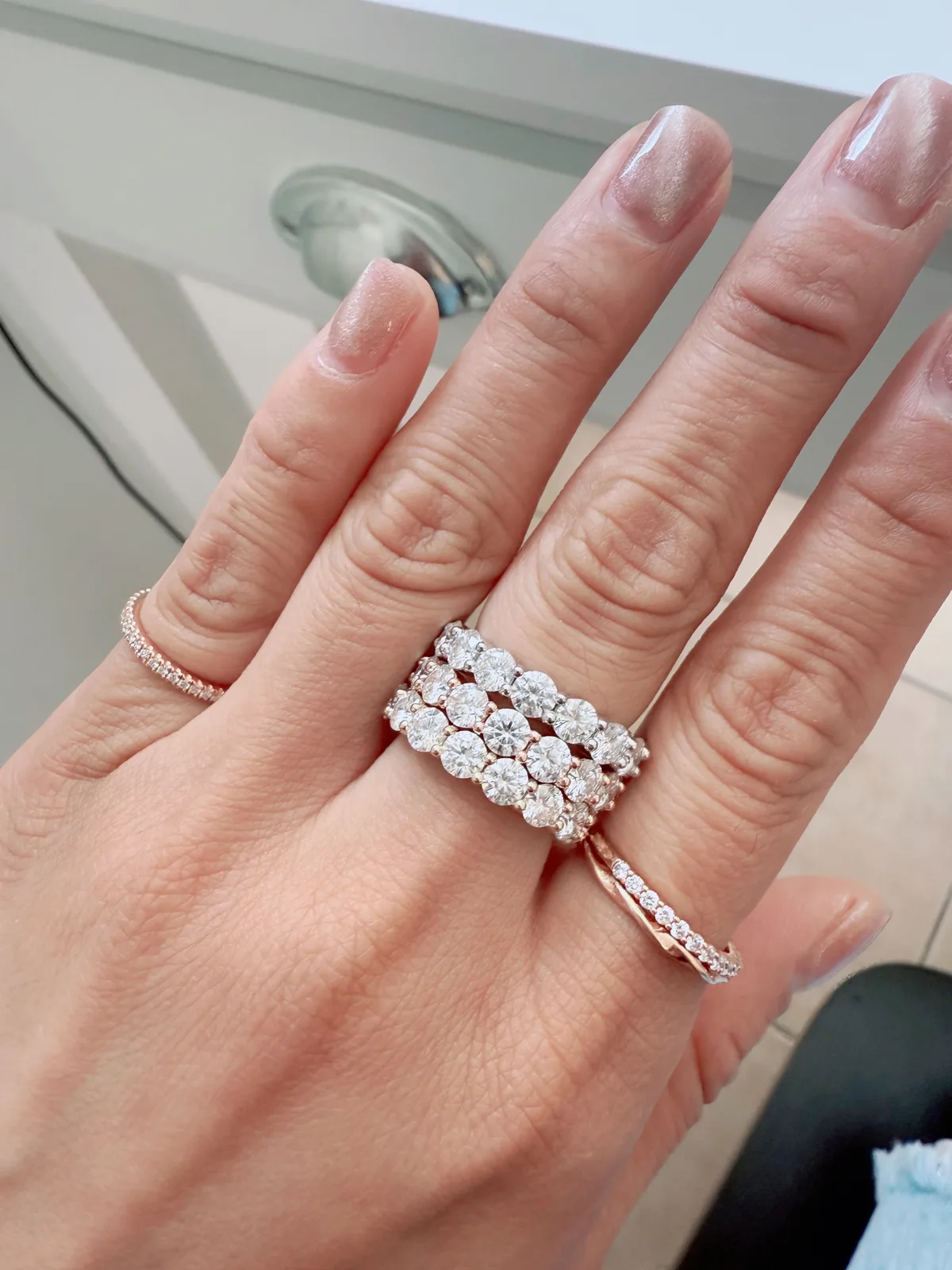
Plain bands: width is the entire design. A 2mm plain band is almost invisible. A 4mm plain band is a quiet classic. You need at least 3mm of metal width for the band to have visual presence without stones.
Eternity bands: the stones do the talking. A 2mm eternity band with small diamonds can look as substantial as a wider plain band. See our eternity band collection.
Contour and shadow bands: designed to nest against your engagement ring. The width is dictated by the ring it fits against, not by preference. I measure the engagement ring's shank and setting height to determine the contour.
Stackable bands: thinner is better. 1.5mm to 2mm each, because you are wearing two or three together. Explore stackable bands. The total width of the stack becomes the statement. Browse all wedding bands.
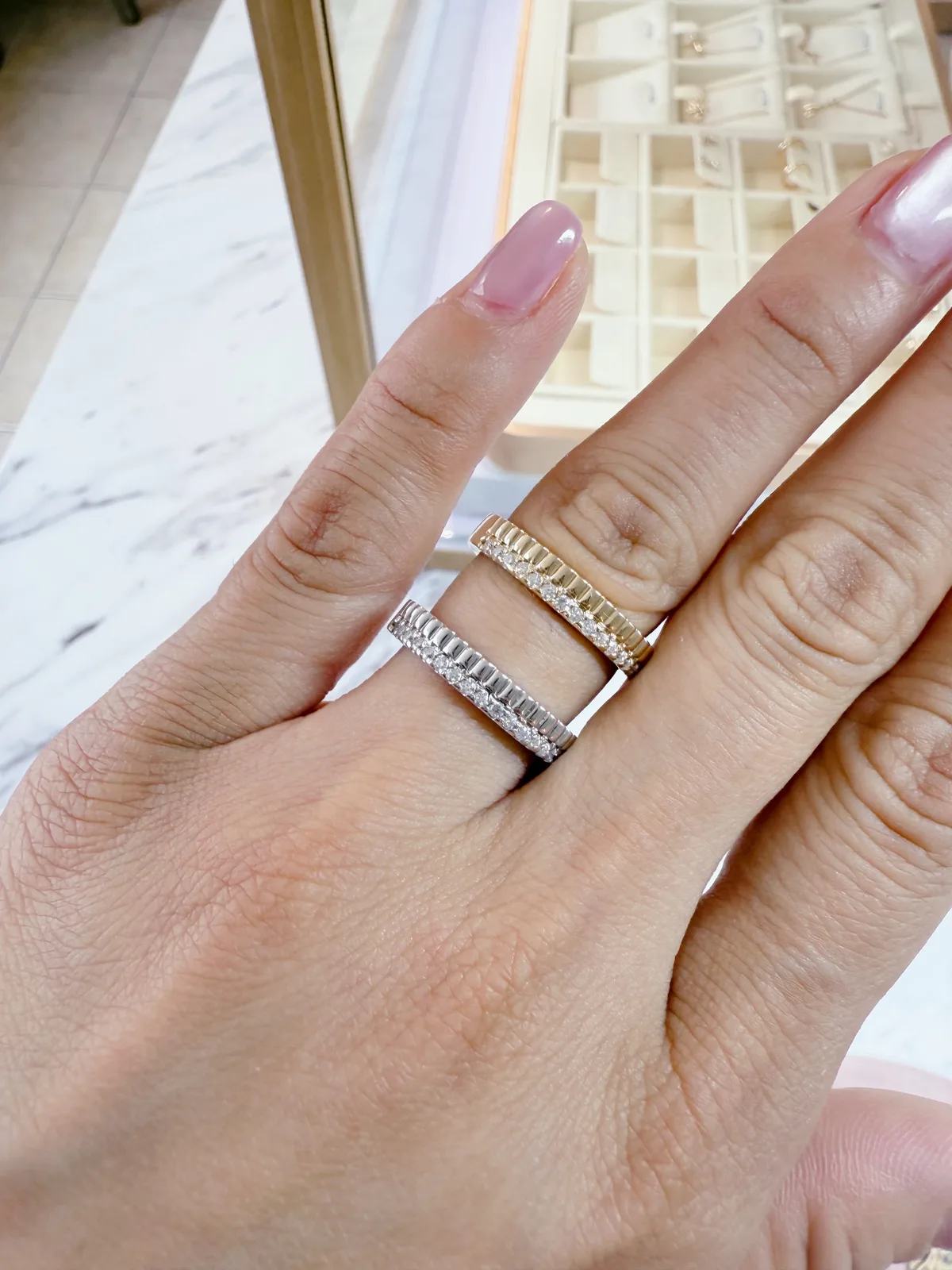
Handmade in New York City vs. Mass-Produced: What You Are Actually Wearing
Every wedding band at Haejin Jewelry is made to order in New York City. Not assembled from stock. Not cast from a shared mold. Made by hand, one band at a time. This is the difference between a handmade wedding band and a mass-produced one, and it matters more than most people realize.
Most wedding bands sold online and in chain stores are made from a single master design. A factory in Shenzhen or Mumbai creates a rubber mold, then casts five hundred to two thousand identical copies a day. The same ring is photographed from different angles by different retailers, listed under different brand names, and sold as if it were something special. It is not. It is the same ring on ten thousand other fingers around the world.
A handmade band is different at every level. A goldsmith shapes the metal, files the edges, sets each stone under magnification, and polishes the surface by hand. The process takes days, not seconds. Forged metal is denser and work-hardened, which means it resists bending, scratching, and cracking in ways that cast metal cannot. Every step is examined. Every prong is cut individually. Every surface is finished one at a time.
| Handmade in NYC | Mass-Produced | |
|---|---|---|
| Made by | Individual goldsmith | Factory assembly line |
| Production | One at a time, days per band | 500 to 2,000 per day from one mold |
| Metal density | Forged, work-hardened, dense | Cast from mold, porous |
| Inspection | Every stage under magnification | Spot-checked by batch |
| Uniqueness | Subtle variations in every piece | Identical to thousands of others |
| Durability | Resists bending, scratching, cracking | Thinner materials, less secure settings |
| Relationship | The jeweler knows your name | Customer service ticket |
| 20 years later | Bring it back to the studio that made it | Call an 800 number |
No two handmade bands are identical. The micro-grain of forged metal catches light differently on every surface. The slight warmth where the goldsmith's tool left its path. These are not imperfections. They are proof that a human being made this for two specific people.
Your DNA is unique. Your fingerprints are unique. The band you will wear for the rest of your life should be, too.
A machine produces a product. A hand produces a witness to your life.
How Metal Changes the Look of Every Width
Yellow gold makes a band look slightly wider because warmth expands visually. White gold and platinum reflect cooler light and read as sleeker. Rose gold splits the difference. Platinum is 60% heavier than gold, so the same width feels more substantial on your finger.
| Metal | Visual Effect on Width | Weight Feel | Care | Starting at (4mm plain) |
|---|---|---|---|---|
| 14K Yellow Gold | Warmth expands visual width | Light to medium | Low | $900 |
| 14K White Gold | Cooler, sleeker appearance | Light to medium | Rhodium replating every 1 to 2 years | $950 |
| 14K Rose Gold | Modern warmth, flattering on all skin tones | Light to medium | Low | $950 |
| Platinum | Most refined, slightly wider appearance | 60% heavier than gold | Low (develops natural patina) | $1,400 |
| 18K Gold | Richer color than 14K | Medium | Slightly softer than 14K | $1,200 |
I always recommend trying the same width in two metals side by side. You will be surprised how different the same number feels. Design your exact metal and width in our Band Atelier.
How Width Affects Comfort: What No One Tells You
Any wedding band wider than 4mm should have comfort fit, which means the inside edge is gently domed instead of flat. The difference between comfort fit and standard fit is the difference between wearing the band forever and taking it off to cook.
Comfort fit reduces the surface contact between the metal and your skin. The dome lets the band slide over the knuckle more easily and sit with less friction throughout the day. I do not let couples leave with a wide band in flat fit. It is the one thing I will push back on.
Your ring size changes throughout the day. Fingers are slightly larger in the evening than in the morning. They swell in summer heat and shrink in winter cold. A wider band amplifies these changes. For bands 5mm and wider, I recommend sizing during the afternoon in warm weather. That is when your finger is at its largest. If you are between sizes in a 6mm band, size up.
Matching Your Band Width to Your Engagement Ring
This is the question behind the question. When someone asks me about width, what they really want to know is: will it look right next to my engagement ring?
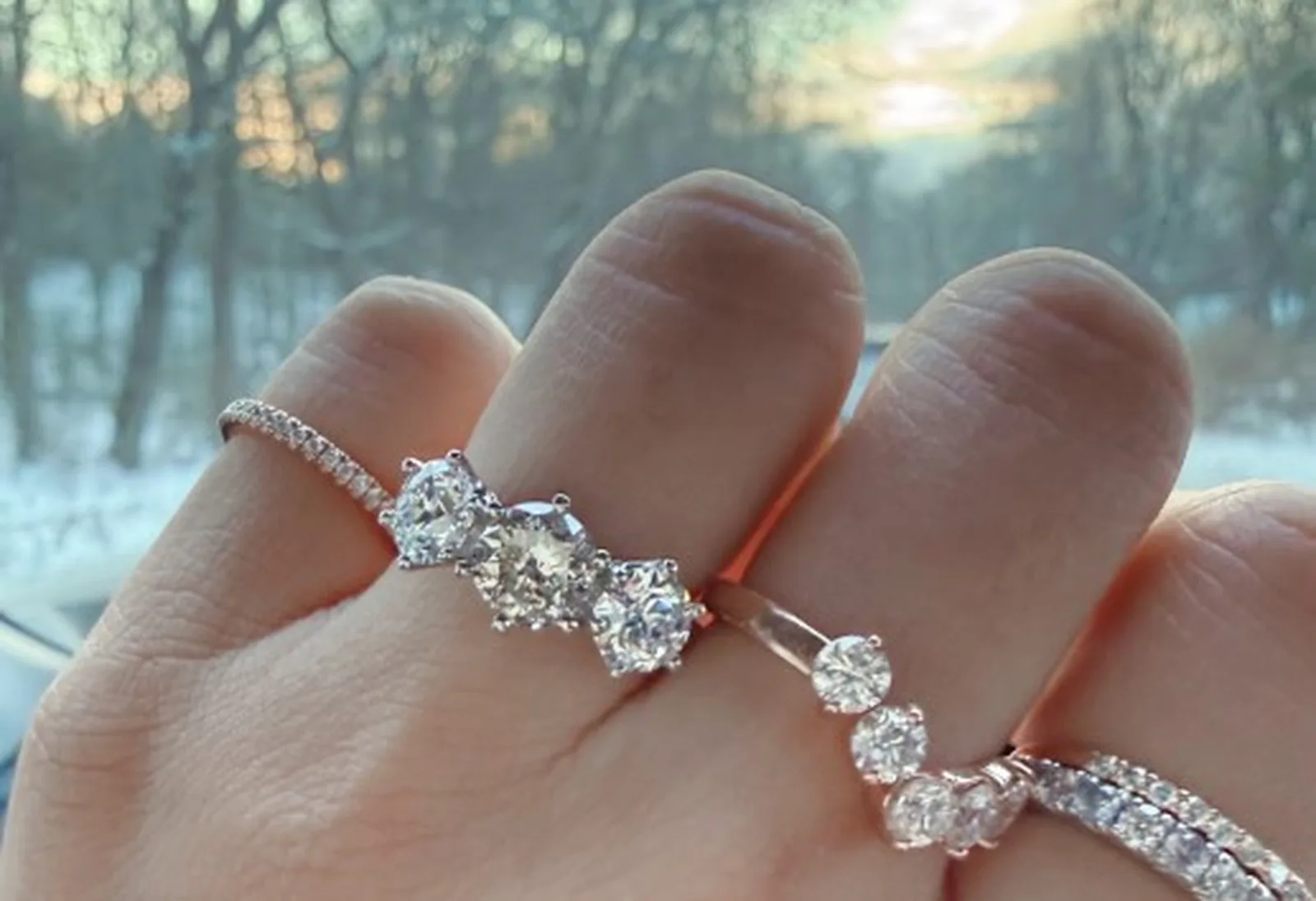
There are two schools of thought, and both are right.
Match the width. If your engagement ring shank is 2.2mm, choose a band around 2mm to 2.5mm. The pair reads as a set. Clean lines, symmetrical profile. This is the approach most of our brides choose.
Contrast the width. A thin 1.5mm band next to a wider engagement ring creates deliberate breathing room. The engagement ring is the star. The band is a quiet accent. This approach works especially well with halo and vintage settings that already have a lot of visual detail.
Some engagement rings have a cathedral setting that prevents a flat band from sitting flush. The band either leaves a gap or rocks side to side. A contour band is milled to follow the curve of the engagement ring. The width of a contour band is determined by the ring it fits, not by preference.
If you designed a custom engagement ring with us, I already know the exact shank width and setting height. Your band fitting takes fifteen minutes because the hard work is done. If you brought your engagement ring from another jeweler, bring it to the fitting. I will measure it and we will find the right pairing together.
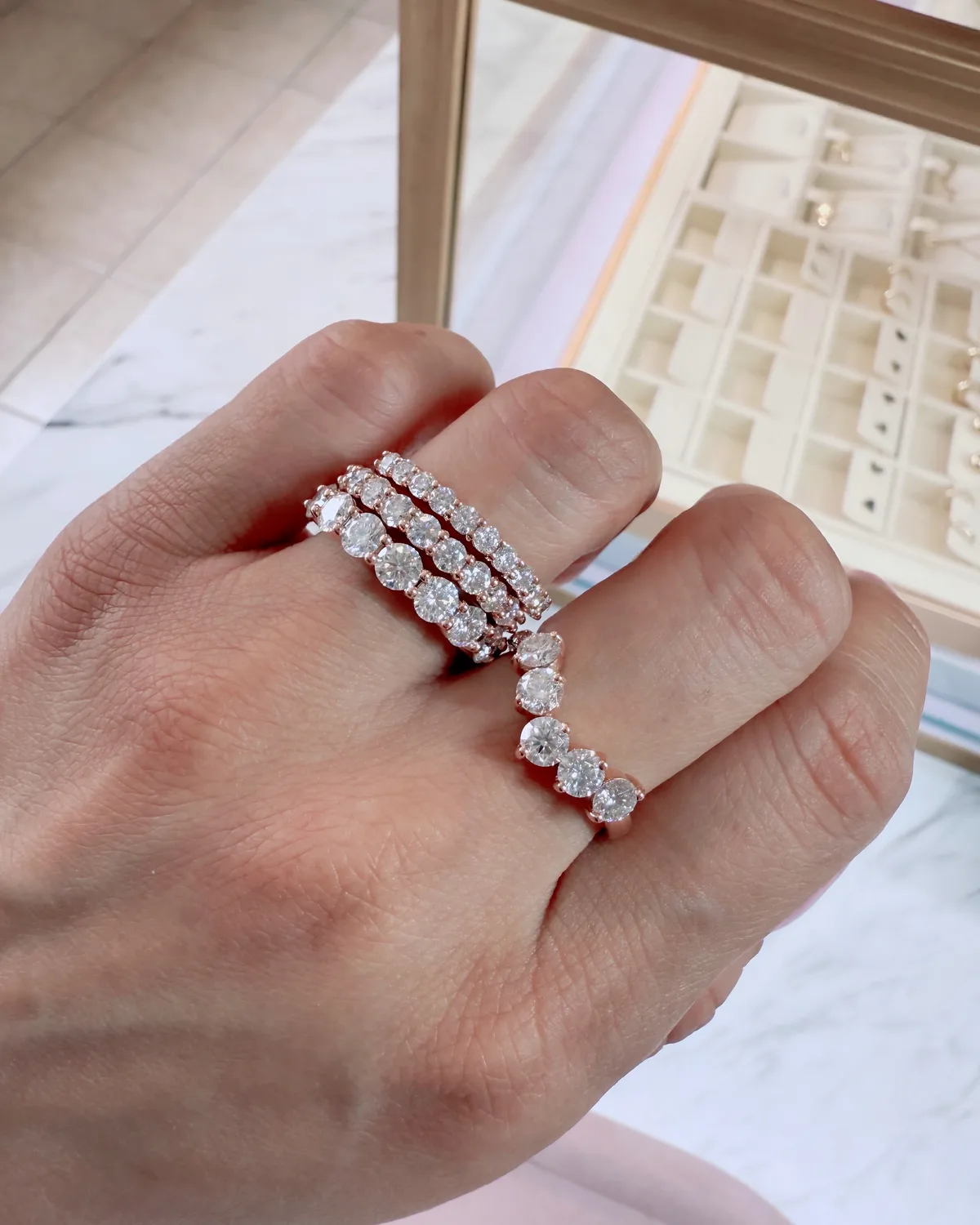
Most of our couples start with the engagement ring and return for the band. The custom engagement ring process page shows exactly how we work from first conversation to finished ring.
Stacking: When One Band Is Not Enough
The stack is not a trend. It is a timeline. The wedding band. The first anniversary eternity band. The push present after the baby. Each one marks a year, a moment, a milestone that deserved its own ring. When you look at a stack of three bands, you are looking at a decade of a life.
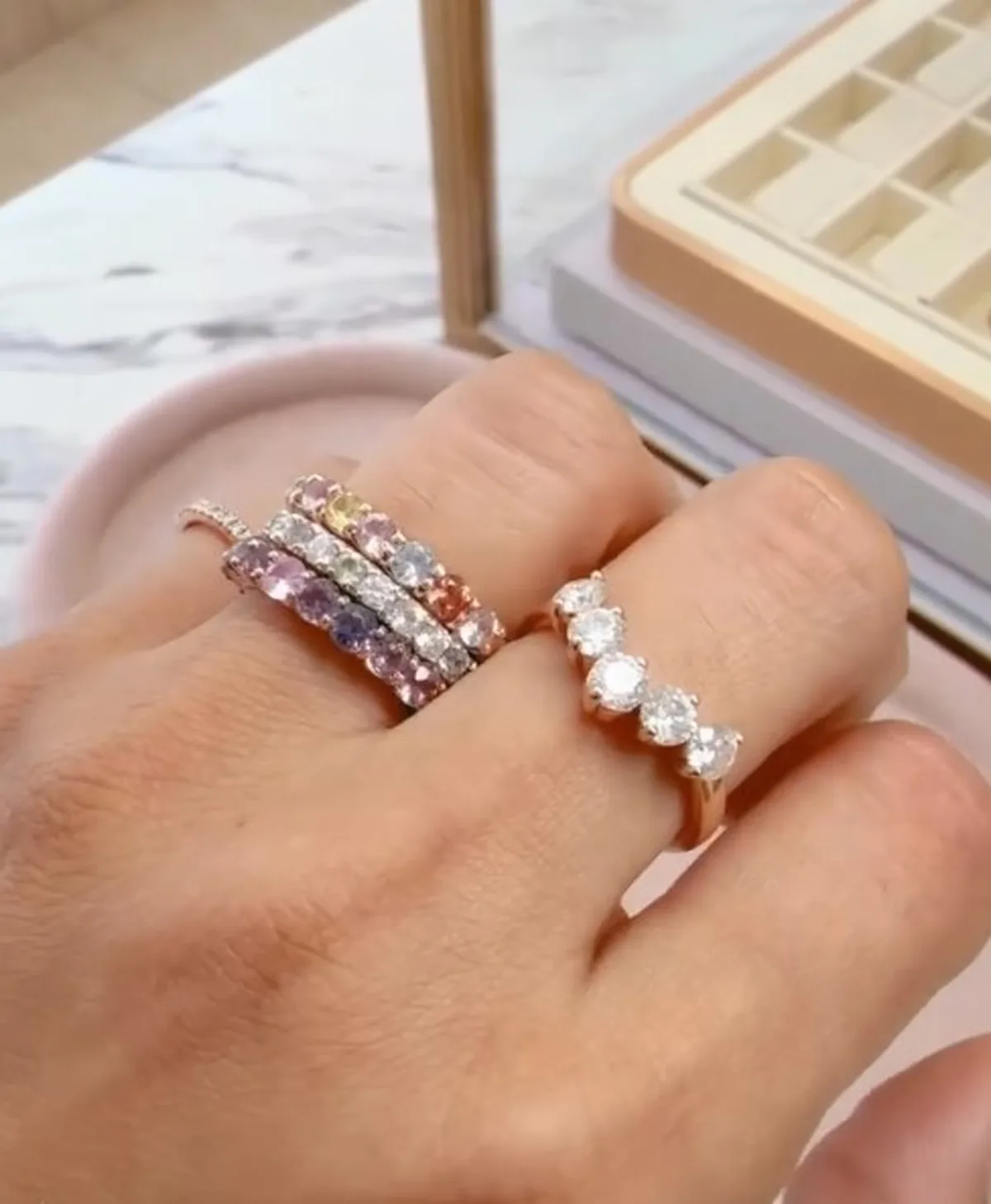
Width matters more when stacking. Thin bands (1.5mm to 2mm) stack cleanly. You can wear three and they still look intentional. Wider bands (3mm to 4mm) stack dramatically. Two 4mm eternity bands next to each other create a wall of diamonds that covers half the space between your knuckles.
Mixed metals tell a story. Yellow gold from the wedding. White gold from the anniversary. Rose gold from the year everything changed. They do not match. They are not supposed to. Each one marks a chapter.
Colored gemstones open the door further. Your anniversary band does not have to be diamonds. Pink sapphire, blue sapphire, emerald, amethyst. Each stone says something different. One couple brought in three bands they had collected over seven years. None of them matched. They all worked together because each one meant something. Explore stackable bands.
Your Band at 20, 30, 40 Years: The Lifetime Relationship
Haejin Jewelry offers a lifetime warranty on every wedding band, including complementary cleaning, prong inspection, resizing, and rhodium replating for white gold. We do not disappear after the sale. The studio that made your band is the studio that will care for it for the rest of your life.
Most jewelers hand you a bag and you never see them again. We do not work that way. A wedding band is not a transaction. It is the beginning of a relationship between you, the ring, and the people who made it.
Year 1: Bring it in for a complementary cleaning and inspection. I check every prong, every setting, every surface. You walk out with a band that looks like the day you put it on.
Year 5: The first signs of daily life appear. Micro-scratches from doorknobs. A faint softening of the polish. Bring it in. I will tell you how it has aged and whether anything needs attention.
Year 10: White gold may need rhodium replating to restore its bright white finish. Complementary. Platinum is developing its patina, a soft satin sheen that many women choose to keep because it looks warmer than the original mirror polish.
Year 20: Your fingers may have changed. Pregnancies, weight shifts, the way hands age. The band adapts because we resize it. We re-inspect. We clean twenty years of life off the metal and hand it back.
Year 30 and beyond: Every micro-scratch is a chapter. The patina is not damage. It is evidence of a life lived wearing this ring. Some couples bring their bands in together. They sit across from each other while I clean decades of life off the metal. And then they put them back on.
The studio that made your band is the studio that will care for it. Not a call center. Not a ticket number. The same bench. The same hands. Learn about our lifetime warranty.
What Wedding Bands Actually Cost in 2026
Wedding bands at Haejin Jewelry in Brooklyn start at $900 for 14K gold plain bands and range to $6,000 or more for wide diamond eternity bands. I believe in transparent pricing. You should know what a band costs before you walk into any studio.
| Band Type | 14K Gold | 18K Gold | Platinum |
|---|---|---|---|
| Plain (2mm to 3mm) | $900 to $1,200 | $1,100 to $1,500 | $1,400 to $1,800 |
| Plain (4mm to 6mm) | $1,200 to $2,000 | $1,500 to $2,500 | $1,800 to $3,200 |
| Diamond eternity (2.5mm) | $1,800 to $3,000 | $2,200 to $3,500 | $2,800 to $4,000 |
| Diamond eternity (4mm+) | $3,000 to $6,000 | $3,500 to $7,000 | $4,500 to $8,000 |
| Contour or shadow band | $900 to $2,200 | $1,100 to $2,800 | $1,400 to $3,200 |
| Stackable (1.5mm to 2mm) | $600 to $1,200 | $800 to $1,500 | $1,000 to $1,800 |
I price every band by weight of metal, cost of stones, and hours of labor. Not by what the market will bear. A 3mm 14K yellow gold comfort-fit band is $900 because the gold costs what it costs and the labor costs what it costs.
For context, the same 3mm diamond eternity band at a Diamond District counter or a national chain retails for $4,000 to $8,000. I do not have storefront rent on 47th Street. I do not have commissioned salespeople. The difference in price is the difference in overhead.
Custom widths and designs: The Band Atelier lets you configure your exact width, metal, and finish with live pricing before you visit. No surprises.
Width Recommendations by Hand Size
These are starting points, not rules.
| Ring Size | Hand Description | Recommended Width |
|---|---|---|
| 4 to 5.5 | Smaller hands, shorter fingers | 1.5mm to 3mm |
| 5.5 to 7 | Medium hands (most common) | 2.5mm to 4mm |
| 7 and above | Larger hands, longer fingers | 4mm to 6mm |
But I have seen women with size 4 fingers wear a 5mm band and it looked exactly right. Because that is who they are. The band matched her energy, not her ring size. Width is personal. The only rule is to try it on.
Frequently Asked Questions
How wide should a woman's wedding band be?
Most women choose between 2mm and 3.5mm. The most popular width at our NYC studio is approximately 2.8mm. But width depends on your hand size, your engagement ring, and your personal style. There is no single right answer.
What is the most popular wedding band width?
For women, 2.5mm to 3mm. For men, 5mm to 6mm. These are the ranges where most couples feel the band is proportional without being too thin or too wide.
Is 4mm too wide for a wedding band?
No. A 4mm band is a statement, not an overstatement. It works especially well for eternity bands where the stones add visual softness to the width. On smaller hands, 4mm is bold. On larger hands, 4mm is balanced.
Should my wedding band be the same width as my engagement ring?
It does not have to be. Matching width creates a clean, symmetrical look. A thinner band creates breathing room and lets the engagement ring be the focus. Both approaches work. Try both in the studio.
What width wedding band for small fingers?
1.5mm to 2.5mm is the most common range for ring sizes 4 to 5.5. But some women with small hands deliberately choose wider bands because they like the look. Try before you decide.
Do wider wedding bands cost more?
Yes, because they use more metal and, in the case of eternity bands, more stones. A 4mm band uses roughly twice the gold of a 2mm band. The price difference is proportional to the material, not arbitrary.
What is comfort fit and do I need it?
Comfort fit means the inside of the band is slightly domed instead of flat. This makes the band easier to slide over the knuckle and more comfortable for all-day wear. I recommend comfort fit for any band 4mm or wider. For thinner bands, it is optional.
Can I resize a wedding band later?
Plain bands can usually be resized up or down by one to two sizes. Eternity bands with stones all the way around are more difficult to resize because resizing requires adding or removing stones. I recommend getting the size right the first time. Come to the studio in the afternoon when fingers are slightly larger than in the morning.
How should a wedding band fit?
It should slide over your knuckle with gentle pressure and sit comfortably at the base of your finger without spinning. It should not leave a mark when you remove it. If it is difficult to get over the knuckle, it is too small. If it spins freely, it is too large.
What is the difference between a wedding band and an eternity band?
A wedding band is any ring exchanged at the ceremony. It can be plain metal, diamond-set, or any style. An eternity band specifically has stones set all the way around the circumference. An eternity band can be a wedding band, but not all wedding bands are eternity bands. Many couples use plain bands for the ceremony and add an eternity band later as an anniversary gift.
Is a handmade wedding band better than a machine-made one?
Handmade bands are denser, more durable, and unique to each piece. Mass-produced bands are cast from a shared mold in batches of hundreds or thousands. A handmade band from our New York City studio will outlast a factory ring at every stage of its life because forged metal is work-hardened and every setting is inspected under magnification.
How long does a wedding band last?
A well-made gold or platinum wedding band will last a lifetime with proper care. Gold slowly wears over decades but can be re-polished and resized indefinitely. Platinum is the most durable precious metal for jewelry. It develops a characteristic patina that many couples choose to keep rather than polish away.
What is the difference between comfort fit and standard fit?
Comfort fit has a gently domed interior that slides easily over the knuckle. Standard fit has a flat interior that grips the finger more tightly. Any band 4mm or wider should be comfort fit. The difference is whether you wear it around the clock or take it off to wash dishes.
Can I design a custom wedding band in NYC?
Yes. At Haejin Jewelry in Brooklyn, every band is made to order in New York City. Use our Band Atelier to configure your exact width, metal, profile, texture, and engraving with live pricing. Or book a fitting at our studio.
Do wedding bands come with a warranty?
Haejin Jewelry offers a lifetime warranty on every wedding band. This includes complementary cleaning, prong inspection, resizing, and rhodium replating for white gold. Bring your band in at any time, whether it is one year old or thirty. We will care for it as long as you wear it.
A Note from Sue
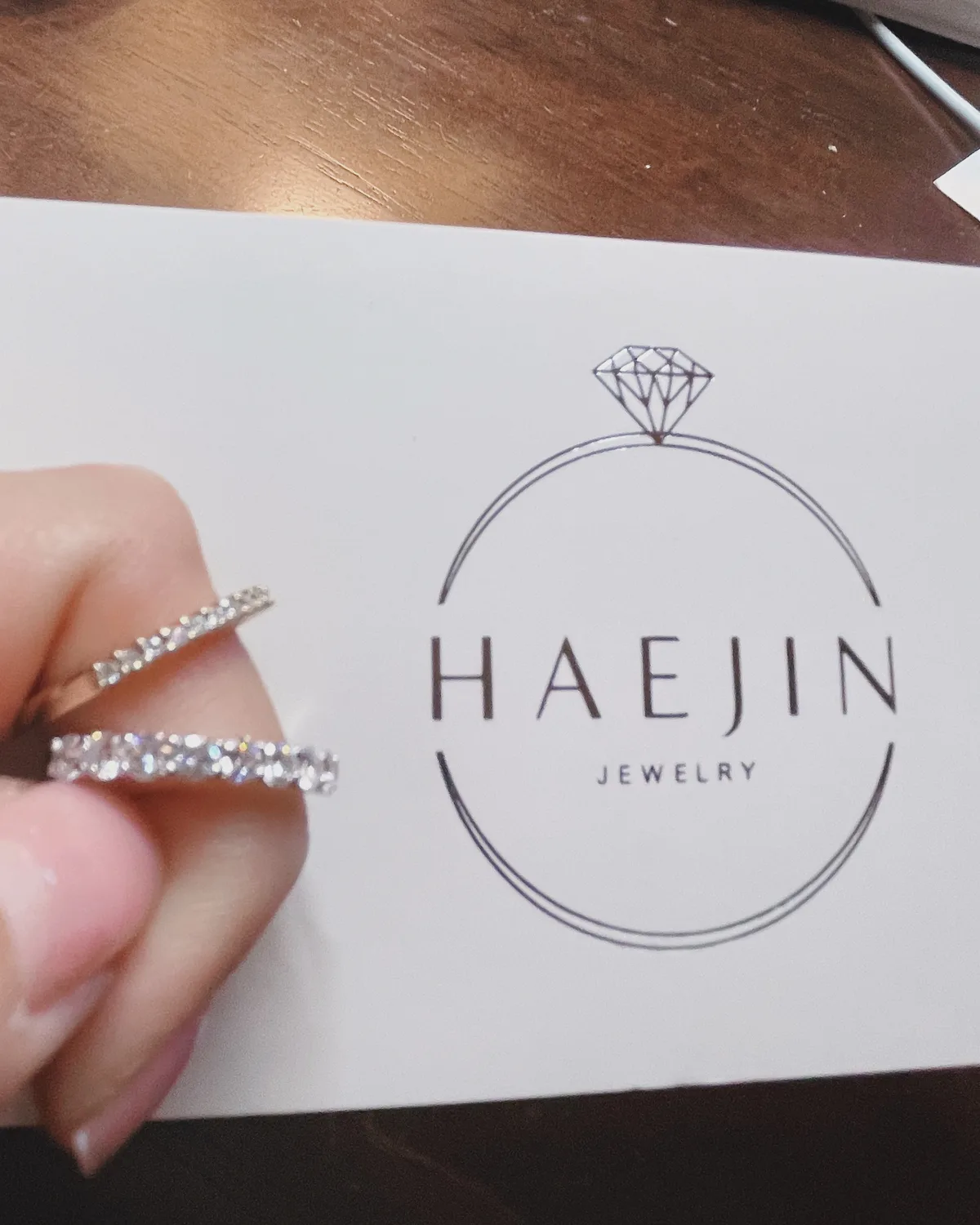
I have made thousands of wedding bands. Not one of them is like another. Not because I am trying to be different. Because metal does not work that way. Each piece of gold has its own grain, its own memory, its own way of catching light.
That is what you are wearing. Not a product from a catalog. A moment from a bench in New York City. Made for your hand. Made for your life.
Width is the one thing I cannot show you on a screen. I can photograph every band in our studio from every angle, and you still will not know until you slide it on your finger and hold your hand under the light.
Our studio is open by appointment. I will pull out every width we carry. You can try them with your engagement ring or on a bare hand. You can try comfort fit against flat fit. You can hold your hand up to the window and see how it looks in natural light, which is nothing like store lighting.
There is no pressure and no timeline. Come when you are ready.
Book a fitting at our studio. Or call us at (929) 552-6465.
Tuesday through Friday, 11 AM to 5 PM. Saturday, 11 AM to 6 PM. Sunday, 11 AM to 4 PM.